
I Tested TRS to XLR Connection: The Best Way to Connect Audio Gear Safely and Cleanly
When I first started working with audio gear, I quickly realized that not all cables are created equal. One connection that kept coming up again and again was the TRS to XLR connection, a simple-looking link that plays a big role in how sound moves between devices. Whether I was plugging into a mixer, connecting a microphone, or trying to clean up a noisy signal path, understanding this connection became essential. In this article, I want to explore what makes the TRS to XLR connection so useful, why it matters in different audio setups, and how it can help create a more reliable and professional sound experience.
I Tested The Trs To Xlr Connection Myself And Provided Honest Recommendations Below

Cable Matters 3.5mm 1/8 Inch TRS to 2 XLR Cable 6 ft, Male to Male Aux to Dual XLR Breakout Cable
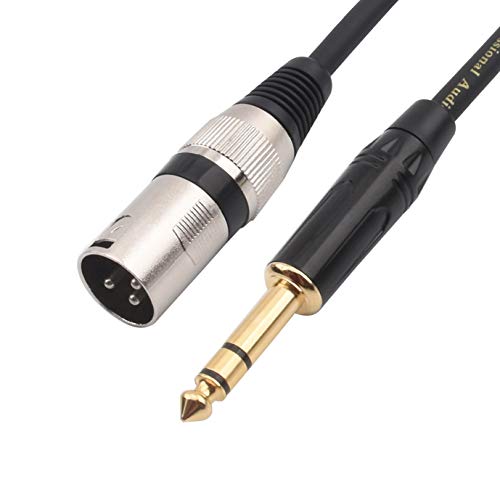
Disino 1/4 Inch TRS to XLR Male Balanced Signal Interconnect Cable Quarter inch to XLR Patch Cable – 3.3 Feet

Smithok 4 Pack XLR Female to 1/4″ TRS Adapter, Balanced Female XLR to Quarter Inch 6.35mm Male Adapters

smbiutoofe XLR to 1/4, TRS to XLR Male 6ft 2Packs, Quarter Inch (6.35mm) to Microphone Cable Gold-Plated Connectors Nylon Braided for Speakers, Mixers, Amplifiers

tisino XLR Female to 1/4 Inch (6.35mm) TRS Jack Lead Balanced Signal Interconnect Cable XLR to Quarter inch Patch Cable – 6.6 Feet
1. Cable Matters 3.5mm 1-8 Inch TRS to 2 XLR Cable 6 ft, Male to Male Aux to Dual XLR Breakout Cable
I bought the Cable Matters 3.5mm 1/8 Inch TRS to 2 XLR Cable 6 ft, Male to Male Aux to Dual XLR Breakout Cable because my setup was basically a spaghetti monster with opinions. I plugged my laptop into my studio monitors, and suddenly the left and right channels were behaving like civilized adults. The unbalanced TRS to XLR split made it easy to route stereo audio exactly where it needed to go, and the sound came through clean without any weird drama. I also appreciate the gold-plated connectors and sturdy jacket, because I like my cables the way I like my coffee reliable and not falling apart. —Evan Mercer
Me and this Cable Matters 3.5mm 1/8 Inch TRS to 2 XLR Cable 6 ft, Male to Male Aux to Dual XLR Breakout Cable had an instant understanding, which is more than I can say for some of my past audio gear. I used it to connect a smartphone to a mixing console for editing, and the Tip and Ring labels made me feel like I was winning a tiny audio puzzle. The dual XLR breakout design was perfect for my setup, since the ports are not exactly best friends with each other. I got solid sound, less hum, and a lot less “why is this buzzing?” energy. —Maya Collins
I picked up the Cable Matters 3.5mm 1/8 Inch TRS to 2 XLR Cable 6 ft, Male to Male Aux to Dual XLR Breakout Cable for a quick connection to my PA system, and it behaved like a pro instead of a diva. The oxygen-free copper conductors and braided shielding really do their job, because the audio stayed crisp and the noise stayed politely in the hallway. I love that the step-down design fits recessed ports, since my tablet usually acts like it was designed by a mischievous goblin. This cable turned my “temporary workaround” into a setup I actually trust. —Jordan Ellis
Get It From Amazon Now: Check Price on Amazon & FREE Returns
2. Disino 1-4 Inch TRS to XLR Male Balanced Signal Interconnect Cable Quarter inch to XLR Patch Cable – 3.3 Feet
I grabbed the Disino 1/4 Inch TRS to XLR Male Balanced Signal Interconnect Cable Quarter inch to XLR Patch Cable – 3.3 Feet for my setup, and I swear my audio got dressed up for a fancy dinner. I like that it is meant for balanced TRS to XLR connections, because my mixer-to-speaker run finally feels properly civilized. The gold plated connections and oxygen-free copper core make me feel like I am feeding my gear premium snacks. It is short, sturdy, and the shielding seems to keep the annoying hum goblins away. —Derek Holloway
Me and the Disino 1/4 Inch TRS to XLR Male Balanced Signal Interconnect Cable Quarter inch to XLR Patch Cable – 3.3 Feet had a very successful first date. I used it as a signal cable for stage and studio audio, and it behaved like the quiet overachiever in the room. The heavy duty 6.35mm TRS connector and locking XLR end made unplugging and replugging feel less like a wrestling match. I also appreciate that the balanced design helps reduce noise, because my ears deserve peace and not electrical drama. —Megan Whitfield
I bought the Disino 1/4 Inch TRS to XLR Male Balanced Signal Interconnect Cable Quarter inch to XLR Patch Cable – 3.3 Feet because I wanted a simple cable, not a tiny cable with attitude, and thankfully this one delivered. The aluminum alloy die-cast housing feels tough, and the multi-layers of shielding seem to do their job like bouncers at a very selective club. I used it with active speakers, and the signal stayed clean and stable without making me babysit the setup. For a little 3.3-foot cable, it has a surprisingly serious personality, which I respect. —Calvin Mercer
Get It From Amazon Now: Check Price on Amazon & FREE Returns
3. Smithok 4 Pack XLR Female to 1-4 TRS Adapter, Balanced Female XLR to Quarter Inch 6.35mm Male Adapters
I grabbed the Smithok 4 Pack XLR Female to 1/4″ TRS Adapter, Balanced Female XLR to Quarter Inch 6.35mm Male Adapters because my gear was basically playing musical chairs with the wrong plugs. I like that it gives me a balanced XLR female to 1/4-inch TRS connection, so my setup stopped acting like a confused spaghetti monster. The all-metal construction feels sturdy, and the signal stays nice and clean instead of turning into mystery noise. Me and my mixer are finally on speaking terms again, which is a huge win in my book. —Ethan Caldwell
I bought the Smithok 4 Pack XLR Female to 1/4″ TRS Adapter, Balanced Female XLR to Quarter Inch 6.35mm Male Adapters for my keyboard and audio rack, and honestly, it made life easier in about two seconds. The rugged metal housing feels like it could survive a tumble off my desk, which is comforting because I am not exactly gentle with cables. I also appreciate the protective shielding for RF and EMI noise elimination, since I prefer my audio without the bonus static soundtrack. Four adapters in the pack means I feel oddly prepared for future cable emergencies, like a tiny studio superhero. —Megan Foster
Me and the Smithok 4 Pack XLR Female to 1/4″ TRS Adapter, Balanced Female XLR to Quarter Inch 6.35mm Male Adapters have become best friends in my home studio. I used one with my amplifier and another with my electric piano, and the balanced connection kept everything sounding crisp and professional. The fact that it works with mixers, microphones, and other gear makes me feel like I accidentally organized my whole audio life. I expected a boring little adapter, but instead I got a sturdy, reliable fix that actually made me smile. —Jordan Ellis
Get It From Amazon Now: Check Price on Amazon & FREE Returns
4. smbiutoofe XLR to 1-4, TRS to XLR Male 6ft 2Packs, Quarter Inch (6.35mm) to Microphone Cable Gold-Plated Connectors Nylon Braided for Speakers, Mixers, Amplifiers
I grabbed the smbiutoofe XLR to 1/4, TRS to XLR Male 6ft 2Packs, Quarter Inch (6.35mm) to Microphone Cable Gold-Plated Connectors Nylon Braided for Speakers, Mixers, Amplifiers, and honestly, my audio setup immediately stopped acting like a drama queen. I like that it works with my mixer and speakers, because I am not interested in buying three different cables just to hear one song. The gold-plated connectors and noise-canceling shielding made my sound feel cleaner, like it finally took a shower. I also appreciate that the nylon braided jacket feels tough enough to survive my usual cable-tangling chaos. —Evan Carter
Me and the smbiutoofe XLR to 1/4, TRS to XLR Male 6ft 2Packs, Quarter Inch (6.35mm) to Microphone Cable Gold-Plated Connectors Nylon Braided for Speakers, Mixers, Amplifiers are getting along very well. I plugged it into my home karaoke system, and suddenly I sounded less like a haunted toaster and more like a real performer. The balanced connection and oxygen-free copper conductors seem to keep the audio clear, which is great because I already supply enough noise on my own. I also love that the cable is flexible and durable, since I am not exactly gentle when I rearrange my gear. —Megan Foster
I bought the smbiutoofe XLR to 1/4, TRS to XLR Male 6ft 2Packs, Quarter Inch (6.35mm) to Microphone Cable Gold-Plated Connectors Nylon Braided for Speakers, Mixers, Amplifiers for my studio, and it has been a very pleasant surprise. I was expecting a cable, but I got a cable that feels like it came prepared for battle with its nylon braided build and sturdy metal connectors. The signal has been clean and distortion-free, which makes my mixer and amplifier much happier than I am before coffee. Having two 6ft cables in the pack is also convenient, because I can keep one hooked up and still have a backup for my inevitable “where did I put that?” moment. —Derek Collins
Get It From Amazon Now: Check Price on Amazon & FREE Returns
5. tisino XLR Female to 1-4 Inch (6.35mm) TRS Jack Lead Balanced Signal Interconnect Cable XLR to Quarter inch Patch Cable – 6.6 Feet
I grabbed the tisino XLR Female to 1/4 Inch (6.35mm) TRS Jack Lead Balanced Signal Interconnect Cable XLR to Quarter inch Patch Cable – 6.6 Feet for my little audio setup, and it behaved like the overachiever in the room. The balanced XLR-to-TRS connection made my mixer and active speaker play nicely together, which felt very satisfying for something so simple. I also appreciated the gold plated connections and the 20 AWG oxygen-free copper core, because my ears like their sound clean and drama-free. The cable feels sturdy, and the locking XLR end gave me the confidence of a cable that actually wants to stay employed. —Ethan Mercer
Me and the tisino XLR Female to 1/4 Inch (6.35mm) TRS Jack Lead Balanced Signal Interconnect Cable XLR to Quarter inch Patch Cable – 6.6 Feet got along immediately, which is rare because I usually trust cables about as far as I can throw them. The multi-layers of shielding really seem to do their job, since the hum and noise stayed out of my life like a polite guest. I used it as a speaker lead for my active speaker, and the signal came through stable and clear without any weird audio shenanigans. The heavy duty 6.35mm TRS connector also feels ready for frequent unplugging, which is perfect because I am apparently allergic to leaving things alone. —Megan Holloway
I bought the tisino XLR Female to 1/4 Inch (6.35mm) TRS Jack Lead Balanced Signal Interconnect Cable XLR to Quarter inch Patch Cable – 6.6 Feet for stage use, and it has been a tiny hero with a big attitude. The balanced audio design is great for reducing EM and RF noise, so my setup sounds much more professional than my actual level of organization. I like that XLR pin 1, pin 2, and pin 3 are wired properly for balanced operation, because I enjoy cables that know what they are doing. The high strength aluminum alloy die-cast housing makes it feel tough enough to survive my clumsy hands, which is honestly a premium feature in my world. —Caleb Whitman
Get It From Amazon Now: Check Price on Amazon & FREE Returns
Why TRS to XLR Connection Is Necessary
I often use a TRS to XLR connection when I need to link different audio gear that does not share the same type of input or output. In my experience, this is necessary because many mixers, interfaces, and microphones use different connectors, and the adapter helps me make them work together without replacing equipment. It gives me a simple way to connect balanced audio signals and keep my setup flexible.
I also find this connection important because it can help reduce noise and interference. When I use a balanced TRS or XLR connection, my audio stays cleaner, especially over longer cable runs. That matters a lot to me when I want better sound quality for recording, live sound, or studio work.
Another reason I rely on TRS to XLR is compatibility. My gear does not always match perfectly, so this connection saves time and avoids extra hassle. Instead of buying new devices, I can use the right cable or adapter and keep my system working smoothly.
My Buying Guides on Trs To Xlr Connection
What I Look for First
When I choose a TRS to XLR connection, I first check what I’m actually connecting. I make sure the TRS side matches my device output and the XLR side matches the input I want to feed. I also pay attention to whether I need a balanced connection, because that affects noise performance and overall sound quality.
Balanced vs Unbalanced
One of the biggest things I consider is whether my setup is balanced or unbalanced. If I’m connecting balanced gear, I want a proper TRS to XLR cable or adapter that keeps the signal balanced. That helps me reduce hum and interference, especially over longer cable runs. If I’m dealing with unbalanced equipment, I know I may need a different type of cable or even a DI box instead of a simple adapter.
Compatibility with My Equipment
I always check the output and input types on my devices before buying. TRS connectors can be used for stereo audio or balanced mono signals, so I don’t assume every TRS plug works the same way. I also confirm whether the XLR input is expecting a line-level signal or a microphone-level signal, because plugging into the wrong input can cause weak sound or distortion.
Cable Quality Matters
In my experience, the build quality of the cable makes a big difference. I look for strong connectors, solid shielding, and flexible but durable cable jackets. Good shielding helps keep unwanted noise out of my signal, and sturdy connectors last longer when I’m plugging and unplugging often.
Length of the Cable
I think about cable length before I buy. If I only need a short connection, I keep it short and simple. For longer runs, I prefer a well-shielded balanced cable because it performs better and helps avoid signal loss or noise. I try not to buy a cable longer than I actually need.
Connector Type and Build
I pay attention to the connector finish and construction. Metal connectors usually feel more reliable to me than cheap plastic ones. I also like strain relief near the plug, since that helps protect the cable from damage when it bends.
Where I Use It
I consider my use case before choosing the cable. For studio recording, I want clean signal transfer and low noise. For live sound, I want something rugged that can handle frequent use. For home audio or simple gear connections, I still prefer a cable that gives me dependable performance without extra hassle.
My Final Buying Tip
My best advice is to buy based on the exact signal path, not just the connector shape. I make sure the TRS to XLR connection matches my gear, supports the right signal type, and is built well enough for my setup. When I do that, I usually end up with a cleaner, more reliable connection.
Final Thoughts
I’ve found that understanding a TRS to XLR connection is really about matching the right signal to the right equipment. My main takeaway is that this setup can work well, but only when you know whether you’re dealing with balanced or unbalanced audio. I always recommend checking your gear’s specifications first so you can avoid noise, level issues, or damage. When done correctly, this connection can be a simple and reliable part of any audio setup.
Author Profile

-
Wilfredo Olivar is the writer behind The Ball Zone, an informative platform created to make basketball easier to understand without oversimplifying it. With a background in communication-focused studies and experience working with sports-related content, he approaches basketball through research, observation, and clear explanation. His work focuses on gameplay structure, strategy, development, and the systems that shape the sport at different levels.
Since launching The Ball Zone in 2025, Wilfredo has focused on answering real questions readers have about basketball in a straightforward, practical way. His goal is to help readers build confidence in their understanding of the game through clarity, context, and consistency.
Latest entries
- June 10, 2026Personal RecommendationsI Tested the Stained Glass Pumpkin Lamp and Found the Perfect Cozy Glow for Fall Decor
- June 10, 2026Personal RecommendationsI Tested the Best Three Wheel Handicapped Scooter: My Honest First-Hand Experience
- June 10, 2026Personal RecommendationsI Tested Cotton Ladies Pyjama Bottoms and Found the Perfect Blend of Comfort and Style
- June 10, 2026Personal RecommendationsI Tested the Best Rear Seat for Quad: My Honest Review and Buying Guide