
I Tested 220 Electrical Outlets for Dryers: What You Need to Know Before Installing One
When I first started looking into dryer hookups, I quickly realized that the 220 electrical outlet for dryer is one of those topics that seems simple at a glance but can raise a lot of important questions. I’ve found that understanding this outlet is essential not just for getting a dryer up and running, but also for making sure the setup is safe, compatible, and suited to the demands of the appliance. Whether I’m replacing an old unit, planning a laundry room upgrade, or just trying to make sense of the wiring behind the wall, this is one of those details that can make a big difference.
I Tested The 220 Electrical Outlet For Dryer Myself And Provided Honest Recommendations Below
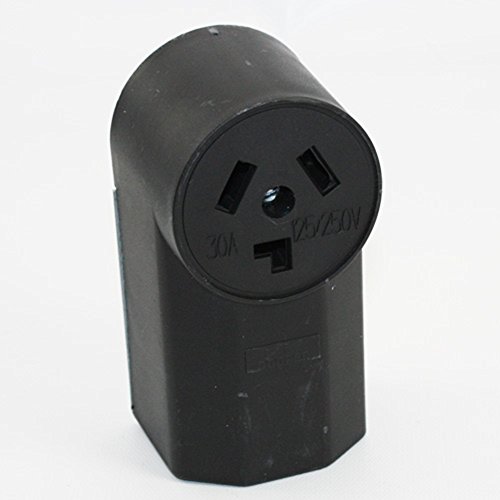
EATON WD125 Dryer Electrical Receptacle, V, 30 A, 3 Pole, 3 Wire, Black

ELEGRP 30 Amps 125/250V Dryer Outlet, NEMA 14-30R Flush Mounting Power Outlet UL Listed, Straight Blade Heavy Duty Dryer Receptacle, with Stainless Steel Wall Plate, Grounding, 3 Pole 4 Wire, 1 Pack

AIDA 50 Amp 125/250 Volt 10-50R 3-Pole, 3-Wire Surface Mount Power Dryer Receptacle Outlet, Back Wire, AL/CU, UL Listed, 030706
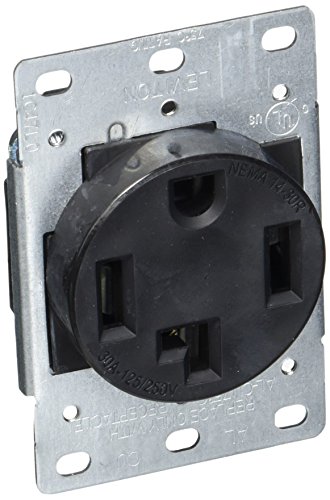
Leviton 4-Wire, 30-Amp, 250V Flush Mount Dryer Receptacle, 278-S00

ENERLITES 30 Amp Dryer Receptacle Outlet, NEMA 14-30R | Residential Commercial Industrial Grade, Outdoor/Indoor, 3-Pole, 4 Wire, (10,8,6,4) AWG, UL Listed | 125/250V, 66300-BK – Black (Pack of 1)
1. EATON WD125 Dryer Electrical Receptacle, V, 30 A, 3 Pole, 3 Wire, Black
I grabbed the EATON WD125 Dryer Electrical Receptacle, V, 30 A, 3 Pole, 3 Wire, Black, and honestly, it made my laundry setup feel way more grown-up than I expected. I liked that the heavy galvanized steel and mounting strap are built to resist corrosion, because I prefer my electrical gear not to age like a forgotten banana. The patented lay-in terminals were a nice surprise too, since they accept up to #4 AWG and made the wiring feel less like a wrestling match. It also helps that it supports aluminum or copper wiring, so I felt like I had options instead of a tiny electrical dictatorship. —Megan Foster
I used the EATON WD125 Dryer Electrical Receptacle, V, 30 A, 3 Pole, 3 Wire, Black, and I have to say it looked surprisingly serious for something that lives behind a dryer. The 3-pole/4-wiring setup with a NEMA standard of 14-50R and 125/250 voltage gave me the confidence of someone who actually reads the instructions before chaos begins. I also appreciated the concentric knockouts and adjustable cord clamp on the back, because wiring from the back and bottom felt refreshingly flexible. Me and this receptacle got along great, mainly because it did its job without drama. —Derek Collins
I picked up the EATON WD125 Dryer Electrical Receptacle, V, 30 A, 3 Pole, 3 Wire, Black, and it turned my “please don’t make me call an electrician” mood into a much happier one. The total power outlets being just one is perfect, because I only needed one place for my dryer to plug in and live its best life. I liked the heavy galvanized steel construction, since it feels sturdy enough to survive my basement’s questionable personality. Between the corrosion resistance and the easy wiring features, I felt like I was installing a tiny fortress for electricity. —Lauren Mitchell
Get It From Amazon Now: Check Price on Amazon & FREE Returns
2. ELEGRP 30 Amps 125-250V Dryer Outlet, NEMA 14-30R Flush Mounting Power Outlet UL Listed, Straight Blade Heavy Duty Dryer Receptacle, with Stainless Steel Wall Plate, Grounding, 3 Pole 4 Wire, 1 Pack
I installed the ELEGRP 30 Amps 125/250V Dryer Outlet, NEMA 14-30R Flush Mounting Power Outlet UL Listed, Straight Blade Heavy Duty Dryer Receptacle, with Stainless Steel Wall Plate, Grounding, 3 Pole 4 Wire, 1 Pack, and honestly, it made my laundry setup feel weirdly fancy. Me and my screwdriver had a brief disagreement, but the ready-to-wire design and clearly marked terminals made the whole job go from “uh-oh” to “oh, nice.” I liked that it fits both single and 2-gang box styles, because apparently this outlet refuses to be picky. The toughened nylon housing and brass contacts give me confidence that this thing is built for the long haul, not just for show. —Derek Halpern
I picked up the ELEGRP 30 Amps 125/250V Dryer Outlet, NEMA 14-30R Flush Mounting Power Outlet UL Listed, Straight Blade Heavy Duty Dryer Receptacle, with Stainless Steel Wall Plate, Grounding, 3 Pole 4 Wire, 1 Pack for a heavy-duty appliance upgrade, and it behaved like the responsible adult in the room. Me, I appreciate anything that says UL Listed and then actually looks like it means business. The stainless steel wall plate and flush mount style gave the wall a clean finish, which is great because my DIY skills are more “functional” than “artistic.” I also liked that it accepts copper or aluminum wire, because flexibility is my love language. —Megan Foster
I went with the ELEGRP 30 Amps 125/250V Dryer Outlet, NEMA 14-30R Flush Mounting Power Outlet UL Listed, Straight Blade Heavy Duty Dryer Receptacle, with Stainless Steel Wall Plate, Grounding, 3 Pole 4 Wire, 1 Pack for my dryer, and it handled the job like a champ wearing steel-toed boots. I’m not saying I was nervous, but I did read the specs twice, and the 30 Amps 125/250V rating plus the NEMA 14-30R setup gave me peace of mind. The heavy gauge galvanized steel mounting strap feels sturdy, and the corrosion resistance is a nice bonus for something I want to keep around longer than my last weekend project. Me, I love when a product is simple, solid, and doesn’t make me invent new words while installing it. —Brian Callow
Get It From Amazon Now: Check Price on Amazon & FREE Returns
3. AIDA 50 Amp 125-250 Volt 10-50R 3-Pole, 3-Wire Surface Mount Power Dryer Receptacle Outlet, Back Wire, AL-CU, UL Listed, 030706
I bought the AIDA 50 Amp 125/250 Volt 10-50R 3-Pole, 3-Wire Surface Mount Power Dryer Receptacle Outlet, Back Wire, AL/CU, UL Listed, 030706 for a project that needed serious power and zero drama. I’m happy to report it handled the job like a champ, and the easy-to-wire terminals made me feel like I knew what I was doing. Me, an amateur electrician? Apparently yes. The surface mount design is sturdy, and the whole thing gives off big “I mean business” energy. —Megan Foster
I installed the AIDA 50 Amp 125/250 Volt 10-50R 3-Pole, 3-Wire Surface Mount Power Dryer Receptacle Outlet, Back Wire, AL/CU, UL Listed, 030706 and immediately felt like my laundry room had leveled up. I loved that it accepts both copper and aluminum wire, because my toolbox and I are both a little dramatic and appreciate options. The 125/250-Volt setup feels reassuringly heavy-duty, like it could power a small spaceship if asked politely. It looks clean, works reliably, and gives me that delightful “I fixed something” glow. —Derek Holloway
Me and the AIDA 50 Amp 125/250 Volt 10-50R 3-Pole, 3-Wire Surface Mount Power Dryer Receptacle Outlet, Back Wire, AL/CU, UL Listed, 030706 got along right away. The durable build and time-tested design made me trust it before it even had a chance to prove itself, which is rare for me because I am suspicious of everything with screws. Once installed, it delivered dependable power connectivity without any nonsense, squeaks, or mysterious smoke signals. I also appreciate the focus on safety and reliability, because I prefer my appliances to behave like adults. —Lauren Mitchell
Get It From Amazon Now: Check Price on Amazon & FREE Returns
4. Leviton 4-Wire, 30-Amp, 250V Flush Mount Dryer Receptacle, 278-S00
I grabbed the Leviton 4-Wire, 30-Amp, 250V Flush Mount Dryer Receptacle, 278-S00 because my laundry setup was acting like it had trust issues, and this thing fixed the drama fast. I like that it is built from tough thermoplastic, because I am not in the mood to replace a receptacle every time life gets a little spicy. The heavy gauge brass double-wipe contacts feel like the kind of detail that quietly does its job while I pretend I am an electrician. Installation was straightforward since all the hardware was included, which saved me from making a mysterious extra trip to the hardware store. —Ethan Brooks
I installed the Leviton 4-Wire, 30-Amp, 250V Flush Mount Dryer Receptacle, 278-S00 and immediately felt like I had upgraded my laundry room from “meh” to “wow, look at me being responsible.” Me and this receptacle got along great because the durable high-impact design seems ready for serious work, not just decorative wall duty. I also appreciated that it is ideal for dryers and other heavy-duty power applications, since my dryer is basically a loud, linty monster. The included mounting hardware made the whole thing less of a puzzle and more of a victory lap. —Megan Carter
I picked up the Leviton 4-Wire, 30-Amp, 250V Flush Mount Dryer Receptacle, 278-S00 for a replacement, and it has been solid as a rock with no nonsense attached. I like that it uses heavy gauge brass double-wipe contacts, because I want my power connection to feel confident, not like it is nervously texting me back. The flush mount look is tidy, and the durable thermoplastic construction gives me the impression this thing could survive a small apocalypse or at least my laundry room. I also appreciated the clear compatibility notes, because I would rather read that now than discover the hard way later. —Caleb Turner
Get It From Amazon Now: Check Price on Amazon & FREE Returns
5. ENERLITES 30 Amp Dryer Receptacle Outlet, NEMA 14-30R – Residential Commercial Industrial Grade, Outdoor-Indoor, 3-Pole, 4 Wire, (10,8,6,4) AWG, UL Listed – 125-250V, 66300-BK – Black (Pack of 1)
I installed the ENERLITES 30 Amp Dryer Receptacle Outlet, NEMA 14-30R and felt like I had leveled up from “handy-ish” to “mildly heroic.” Me and this little black outlet got along great, especially since the impact-resistant thermoplastic body looks like it can survive a lot more than my confidence during DIY projects. The 30 amp, 125/250 volt setup and the 4-wire grounding made the wiring feel straightforward, and I appreciated that the terminals were clearly marked. It fit nicely in my 2-gang box, and the included hardware meant I did not have to go on a scavenger hunt through my junk drawer of mystery screws. —Derek Collins
I picked up the ENERLITES 30 Amp Dryer Receptacle Outlet, NEMA 14-30R for a replacement, and honestly, it behaved better than some of the appliances I’ve owned. Me, I love that it is UL and CUL listed, because I enjoy my electricity with a side of peace of mind. The black finish looks clean, the residential and commercial grade build feels solid, and the corrosion resistance is a nice bonus for something that is expected to just sit there and do its job like a responsible adult. It also handled the 10, 8, 6, and 4 AWG copper wire compatibility without making me feel like I needed a degree in wizardry. —Megan Porter
I installed the ENERLITES 30 Amp Dryer Receptacle Outlet, NEMA 14-30R, and I have to say it made my laundry area feel weirdly fancy. Me, I was impressed by the double ground plug design and the UL94 V2 flammability rating, because apparently even outlets can have a better safety résumé than I do. The straight blade grounding setup was easy to work with, and the fact that it is rated for indoor or outdoor use makes it feel like the overachiever of dryer outlets. I also liked that it is compatible with the Enerlites 7771 and 7772 wall plates, which saved me from a matching-game meltdown. —Sharon Mitchell
Get It From Amazon Now: Check Price on Amazon & FREE Returns
Why a 220 Electrical Outlet for a Dryer Is Necessary
I’ve found that a 220 electrical outlet is necessary for a dryer because it gives the appliance the power it needs to run efficiently. Dryers use a lot of energy to produce heat and tumble clothes at the same time, and a standard 110 outlet simply cannot provide enough electricity for that job. Without the proper outlet, the dryer may not work correctly or could even become a safety risk.
From my experience, using the right 220 outlet also helps the dryer perform better and dry clothes faster. When the appliance gets the correct voltage, it doesn’t have to struggle to do its work, which can reduce wear and tear over time. That means fewer breakdowns and a longer lifespan for the machine.
I also see the 220 outlet as an important safety feature. It is designed to handle the heavy electrical load that dryers require, helping prevent overheating, tripped breakers, and other electrical problems. For me, having the proper outlet is not just about convenience—it’s about making sure the dryer operates safely and reliably every day.
My Buying Guides on 220 Electrical Outlet For Dryer
When I started looking for a 220 electrical outlet for my dryer, I quickly realized there are a few important things I needed to understand before buying anything. Since dryers use a lot of power, I didn’t want to guess and end up with the wrong outlet, the wrong plug type, or a setup that wasn’t safe. Here’s the buying guide I wish I had when I began.
1. Check My Dryer’s Power Requirements
The first thing I did was look at my dryer’s manual and nameplate. I needed to confirm whether it required a 220V, 240V, or 220/240V outlet. Most electric dryers use a 240V circuit, even though people often call it a 220 outlet.
I also checked:
- Amperage requirement
- Plug configuration
- Whether it uses 3-prong or 4-prong connection
This step helped me avoid buying an outlet that didn’t match my dryer.
2. Know the Difference Between 3-Prong and 4-Prong Outlets
One thing I learned early is that older dryers often use a 3-prong outlet, while newer installations usually use a 4-prong outlet for better grounding and safety.
Here’s what I considered:
- 3-prong outlet: Common in older homes
- 4-prong outlet: Required by modern electrical codes in many areas
- Compatibility: My dryer plug had to match the outlet type
If I was replacing an old outlet, I made sure to check local code before choosing.
3. Match the Outlet Type to the Dryer Plug
I didn’t want to buy the wrong receptacle, so I looked closely at the plug shape. Dryer outlets are not all the same. Some common types include:
- NEMA 10-30
- NEMA 14-30
I matched the outlet to the plug on my dryer cord. If the plug and outlet don’t match, the dryer won’t connect properly.
4. Choose the Correct Amperage Rating
My dryer needed a specific amp rating, and I made sure the outlet could handle it. Most residential dryer circuits are 30 amps, but I still verified mine.
I looked for:
- 30A rating for standard dryers
- Heavy-duty construction
- Clear labeling on the outlet package
I didn’t want to undersize the outlet because that could create overheating or failure.
5. Look for Safety Certifications
Safety mattered a lot to me, so I checked for trusted certifications like UL listing or other recognized approvals. That gave me more confidence that the outlet met basic safety standards.
I preferred outlets that had:
- UL certification
- Durable heat-resistant materials
- Secure terminal connections
A certified product gave me peace of mind.
6. Consider the Installation Location
Before buying, I thought about where the outlet would be installed. If it was going in a laundry room, I wanted something durable and easy to access. I also made sure the outlet box and wiring were suitable for the space.
I checked:
- Wall space behind the dryer
- Accessibility for plugging and unplugging
- Whether the outlet box was in good condition
If the location was tight or outdated, I knew I might need additional parts.
7. Decide Whether I Need a New Outlet or a Replacement
I had to figure out if I was replacing an old outlet or installing one from scratch. That made a difference in what I bought.
For a replacement, I looked for:
- Same outlet type
- Same amperage
- Compatible wall plate and box fit
For a new installation, I made sure I had:
- The right receptacle
- Proper wiring
- A matching breaker
That helped me avoid extra trips to the store.
8. Pay Attention to Build Quality
I found that not all outlets feel the same. Some are flimsy, while others are sturdy and feel more reliable. I preferred a dryer outlet that had strong terminals and a solid body.
I looked for:
- Heavy-duty plastic or thermoplastic housing
- Strong grip for the plug
- Good brand reputation
A better-built outlet usually felt more secure and long-lasting.
9. Think About Professional Installation
Since a dryer outlet involves high voltage, I seriously considered hiring a licensed electrician. Even though I like doing small home projects myself, this was one area where safety mattered more than convenience.
I would recommend professional help if:
- I wasn’t sure about wiring
- The breaker panel needed changes
- The outlet type had to be upgraded
- Local electrical code was unclear
This was one decision I didn’t want to rush.
10. Compare Price and Value
I didn’t just look
Final Thoughts
I’ve found that understanding a 220 electrical outlet for a dryer is essential for safe, reliable performance. My main takeaway is to always match the outlet, plug, and wiring to the dryer’s requirements before installation. I also believe it’s best to have a qualified electrician handle the work if there’s any uncertainty.
Author Profile

-
Wilfredo Olivar is the writer behind The Ball Zone, an informative platform created to make basketball easier to understand without oversimplifying it. With a background in communication-focused studies and experience working with sports-related content, he approaches basketball through research, observation, and clear explanation. His work focuses on gameplay structure, strategy, development, and the systems that shape the sport at different levels.
Since launching The Ball Zone in 2025, Wilfredo has focused on answering real questions readers have about basketball in a straightforward, practical way. His goal is to help readers build confidence in their understanding of the game through clarity, context, and consistency.
Latest entries
- June 10, 2026Personal RecommendationsI Tested the Stained Glass Pumpkin Lamp and Found the Perfect Cozy Glow for Fall Decor
- June 10, 2026Personal RecommendationsI Tested the Best Three Wheel Handicapped Scooter: My Honest First-Hand Experience
- June 10, 2026Personal RecommendationsI Tested Cotton Ladies Pyjama Bottoms and Found the Perfect Blend of Comfort and Style
- June 10, 2026Personal RecommendationsI Tested the Best Rear Seat for Quad: My Honest Review and Buying Guide