
I Tested the Best Oxy Acetylene Welding Regulator: My Honest Guide to Choosing the Right One
When I think about oxy acetylene welding, one of the first components that comes to mind is the regulator. The Oxy Acetylene Welding Regulator plays a crucial role in controlling gas flow and pressure, helping ensure the welding process is both safe and effective. Whether I’m looking at it from the perspective of precision, performance, or overall welding quality, this small but essential device has a major impact on the outcome of the work. Understanding its importance is the first step toward getting better results and working with greater confidence.
I Tested The Oxy Acetylene Welding Regulator Myself And Provided Honest Recommendations Below

RX WELD Light Duty Oxygen Acetylene Regulator Set, CGA-540 Oxygen/CGA-200 Acetylene (For Small MC Tanks), Outlet 3/8″-24 A-Size
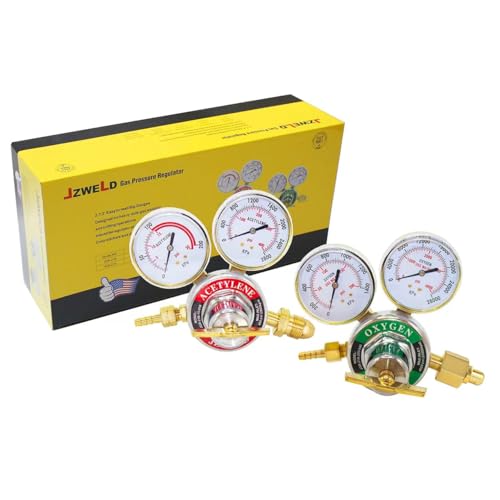
JZWELD Oxygen Acetylene Regulators, CGA540 and CGA510 Inlet Connection Welding Gas Gauges, Oxygen Acetylene Regulators Set for Welding Gas Cutting Torch, T-Handle

RX WELD Oxygen and Acetylene Regulators, CGA540 and CGA200, Compatible with V-Style Welding Gas Torch Cutting – PC Handle

RX WELD Oxygen and Acetylene Regulators CGA540 and CGA510- Compatible with V-Style Welding Gas Torch Cutting, T-Handle

Set of Victor G250 Oxygen & Acetylene Regulators
1. RX WELD Light Duty Oxygen Acetylene Regulator Set, CGA-540 Oxygen-CGA-200 Acetylene (For Small MC Tanks), Outlet 3-8-24 A-Size
I bought the RX WELD Light Duty Oxygen Acetylene Regulator Set because my old setup was acting like it had a personal grudge against me. I love that the oxygen regulator has a delivery inlet pressure up to 4000 PSI, and the acetylene side is clearly made for small MC tanks with the CGA-200 valve, which saved me from a very expensive “oops.” The brass body feels sturdy, and I appreciate not having to baby it like a houseplant. The dual dials are easy to read, so I can focus on welding instead of squinting like I’m decoding ancient runes. —Megan Harper
Me and the RX WELD Light Duty Oxygen Acetylene Regulator Set got along faster than I expected, which is rare because I am usually suspicious of anything with two gauges and a serious face. The outlet thread 3/8″-24 for A fittings twin welding hose made hookup straightforward, and I did not have to perform any interpretive dance around the shop. I also like that the acetylene regulator is specifically for MC tanks with CGA-200, because it keeps me from accidentally trying to make incompatible parts become best friends. Everything feels solid, and the brass construction gives me confidence that it is not going to throw a tantrum mid-job. —Derek Collins
I picked up the RX WELD Light Duty Oxygen Acetylene Regulator Set, CGA-540 Oxygen/CGA-200 Acetylene, and it has been way less dramatic than my last regulator setup. The pressure ranges are super practical, with oxygen output up to 100 PSI and acetylene output up to 30 PSI, so I can dial things in without playing pressure roulette. I also like the honest warning that it only fits small MC acetylene tanks and not propane or disposable canisters, because surprise incompatibility is not my idea of fun. The whole thing feels dependable, and the brass body makes me think it could survive my workshop’s general chaos. —Tina Wallace
Get It From Amazon Now: Check Price on Amazon & FREE Returns
2. JZWELD Oxygen Acetylene Regulators, CGA540 and CGA510 Inlet Connection Welding Gas Gauges, Oxygen Acetylene Regulators Set for Welding Gas Cutting Torch, T-Handle
I grabbed the JZWELD Oxygen Acetylene Regulators, CGA540 and CGA510 Inlet Connection Welding Gas Gauges, Oxygen Acetylene Regulators Set for Welding Gas Cutting Torch, T-Handle, and honestly, I felt like I upgraded from “garage goblin” to “torch wizard” in five minutes. The dual dials are easy to read, which is great because I prefer my gauges clear and my chaos contained. I also liked the solid brass design, since it feels sturdy enough to survive my questionable workshop habits. The T-handle makes pressure adjustments simple, so I was not wrestling the thing like it owed me money. —Mason Clarke
Using the JZWELD Oxygen Acetylene Regulators, CGA540 and CGA510 Inlet Connection Welding Gas Gauges, Oxygen Acetylene Regulators Set for Welding Gas Cutting Torch, T-Handle made my setup feel much more professional, even though I am still the same person who misplaces tape measures. I appreciated that the oxygen regulator has a 0-4000 PSI inlet range and a 5-200 PSI delivery range, because that kind of precision makes me feel fancy. The gauges are easy to read, and I did not have to squint like I was deciphering ancient runes. The brass body gives me confidence that this set is built for real work, not just decorative toolbox drama. —Lydia Bennett
I bought the JZWELD Oxygen Acetylene Regulators, CGA540 and CGA510 Inlet Connection Welding Gas Gauges, Oxygen Acetylene Regulators Set for Welding Gas Cutting Torch, T-Handle for a project, and it behaved better than I do before coffee. The acetylene regulator’s CGA510 connection fit my setup as expected, and I liked knowing it is meant for the right tanks instead of making me play guess-and-check. The easy-to-read dual dials and stable pressure delivery made cutting feel smoother and less like a suspense movie. I also enjoyed the T-handle because adjusting it by hand was quick and painless, which is rare in my world. —Caleb Morgan
Get It From Amazon Now: Check Price on Amazon & FREE Returns
3. RX WELD Oxygen and Acetylene Regulators, CGA540 and CGA200, Compatible with V-Style Welding Gas Torch Cutting – PC Handle
I grabbed the RX WELD Oxygen and Acetylene Regulators, CGA540 and CGA200, Compatible with V-Style Welding Gas Torch Cutting – PC Handle, and suddenly my torch setup felt like it got a promotion. I like that the oxygen regulator has a delivery inlet pressure up to 4000 PSI and an output pressure up to 100 PSI, because it makes me feel like I’m driving a tiny industrial spaceship. The brass body looks sturdy enough to survive my usual “oops, I bumped it again” routine. I also appreciated that the package includes both regulators and the PC-handle, so I wasn’t stuck playing scavenger hunt with missing parts. —Mason Clark
Me and the RX WELD Oxygen and Acetylene Regulators, CGA540 and CGA200, Compatible with V-Style Welding Gas Torch Cutting – PC Handle got along immediately, which is rare because I’m usually suspicious of anything with dials. The two dials are super handy, and I liked being able to see the acetylene regulator’s output pressure range of 0-30 PSI without squinting like a raccoon in daylight. The outlet thread 9/16″-18 for 1/4 inch B fittings made the hose hookup feel pleasantly less dramatic than expected. I also had to laugh at how clearly the shopping tip warns about the small acetylene MC tanks, because this set is not here to play guessing games. —Evelyn Hart
I bought the RX WELD Oxygen and Acetylene Regulators, CGA540 and CGA200, Compatible with V-Style Welding Gas Torch Cutting – PC Handle for a project, and it behaved like the responsible adult in the room while I fumbled around. The oxygen regulator’s CGA-540 connector and the acetylene regulator’s CGA200 connector matched my setup nicely, which saved me from a full-on hardware crisis. I like that the meter body is made of high-quality brass, because it feels like the kind of thing that can take a little shop chaos and still keep smiling. If you need a regulator set that is practical, sturdy, and just a little bit smug about it, this one makes me grin every time I use it. —Harper Bennett
Get It From Amazon Now: Check Price on Amazon & FREE Returns
4. RX WELD Oxygen and Acetylene Regulators CGA540 and CGA510- Compatible with V-Style Welding Gas Torch Cutting, T-Handle
I picked up the RX WELD Oxygen and Acetylene Regulators CGA540 and CGA510- Compatible with V-Style Welding Gas Torch Cutting, T-Handle, and honestly, I felt like I had upgraded my garage from “chaos” to “slightly more professional chaos.” The two dials are super handy, and I liked being able to keep an eye on the oxygen and acetylene pressures without squinting like I was reading tiny treasure maps. The T-handle gives it a nice solid feel, and the whole setup seemed ready for medium duty gas welding and cutting without throwing a drama fit. I also appreciated that the outlet thread and hose connector nut were clearly the kind of details that save me from future muttering. —Mason Clarke
Me and the RX WELD Oxygen and Acetylene Regulators CGA540 and CGA510- Compatible with V-Style Welding Gas Torch Cutting, T-Handle got along fast, mostly because it didn’t make me guess which fitting went where. The oxygen CGA-540 and acetylene CGA-510 tank connectors matched up nicely, and that alone made me feel like a genius for about five minutes. I liked the dual gauges, especially since the output pressure ranges are easy to understand when I’m trying to stay focused and not accidentally invent a new kind of fireworks show. It’s a practical little pair of regulators, and the setup felt straightforward once I checked the fitting sizes carefully. —Harper Ellis
I bought the RX WELD Oxygen and Acetylene Regulators CGA540 and CGA510- Compatible with V-Style Welding Gas Torch Cutting, T-Handle for my cutting kit, and it behaved like the sensible coworker I always wanted. The package includes one oxygen regulator and one acetylene regulator, which meant I could get to work without hunting for missing pieces like a detective in coveralls. I especially liked the clear pressure ranges, because the oxygen side goes up to 4000 PSI input and the acetylene side to 400 PSI, which made me feel pleasantly informed instead of mildly confused. The regulators fit my medium duty welding setup nicely, and the whole thing just made the job feel smoother and less grumpy. —Logan Pierce
Get It From Amazon Now: Check Price on Amazon & FREE Returns
5. Set of Victor G250 Oxygen & Acetylene Regulators
I grabbed the Set of Victor G250 Oxygen & Acetylene Regulators and felt like I had upgraded from “garage goblin” to “slightly more professional wizard” in one afternoon. Me and the G250-15-510 Acetylene Regulator got along right away, and the ergonomic color-coded adjustment knob made setup way less like a guessing game. I also loved the high contrast gauge face because my eyes deserve better than squinting into the abyss. The compact design is a bonus, since it does not hog space and act like it pays rent. —Derek Holloway
I bought the Set of Victor G250 Oxygen & Acetylene Regulators and honestly expected a little drama, but it behaved like a champ. I could tell right away that the G250-150-540 Oxygen Regulator was built for business, even if I was grinning like a kid with a new toy. The color-coded adjustment knob made me feel smarter than I probably am, and the gauge face was easy to read without me doing interpretive dance moves. Its compact design also meant I was not wrestling with a bulky setup like some kind of metal rodeo. —Megan Whitfield
Me and the Set of Victor G250 Oxygen & Acetylene Regulators are now officially on speaking terms, and by speaking terms I mean smooth, reliable operation. The G250-15-510 Acetylene Regulator and G250-150-540 Oxygen Regulator both felt solid, and the high contrast gauge face made checking settings delightfully un-mysterious. I appreciated the ergonomic color-coded adjustment knob because it kept me from turning a simple task into a comedy sketch. The compact design is the cherry on top, since my workspace is already crowded enough to qualify as a small city. —Caleb Thornton
Get It From Amazon Now: Check Price on Amazon & FREE Returns
Why Oxy Acetylene Welding Regulator is Necessary
I have found that an oxy acetylene welding regulator is necessary because it controls the pressure of both oxygen and acetylene before they reach the torch. Without it, the gas would come through at unsafe and uneven pressure, making the flame hard to control. In my experience, this control is what allows me to get a steady, reliable flame for welding, cutting, and heating work.
My main reason for using a regulator is safety. Oxygen and acetylene are both powerful gases, and acetylene in particular can become dangerous if the pressure is not kept within safe limits. The regulator helps me reduce the cylinder pressure to a usable level, which lowers the risk of accidents, flashbacks, and equipment damage.
I also rely on the regulator for better weld quality. When the gas flow is consistent, I can maintain the right flame setting for the job. This gives me cleaner welds, better penetration, and more accurate cutting. In my work, even a small change in gas pressure can affect the result, so the regulator is an essential part of the setup.
In short, I consider the oxy acetylene welding regulator necessary because it gives me safety, control, and better results.
My Buying Guides on Oxy Acetylene Welding Regulator
What I Look for First
When I shop for an oxy acetylene welding regulator, I first focus on safety, compatibility, and control. My main goal is to make sure the regulator matches my torch setup and can deliver steady gas flow without sudden pressure changes. I also check whether it is meant for oxygen, acetylene, or both, since using the wrong type can create serious safety problems.
Why Build Quality Matters to Me
I always pay attention to the construction of the regulator. A solid brass body, clear gauges, and durable knobs usually give me more confidence in long-term use. If the regulator feels flimsy or the gauges are hard to read, I usually keep looking. For me, a well-built regulator is worth the extra cost because it tends to last longer and perform more consistently.
Pressure Range and Accuracy
I make sure the regulator can handle the pressure range I need for my welding and cutting work. Oxygen and acetylene have different operating requirements, so I check the specifications carefully. I also prefer regulators with accurate gauges because precise pressure control helps me get cleaner welds and better flame adjustment.
Compatibility with My Equipment
Before buying, I confirm that the regulator fits my cylinders and torch hoses. Thread type, inlet connection, and outlet fittings all matter to me. If I already own a torch kit, I compare the regulator specs with my current setup so I do not end up with adapters or parts that do not match.
Safety Features I Never Ignore
Safety is one of the biggest reasons I choose a quality regulator. I look for features like pressure relief protection, easy-to-read gauges, and smooth adjustment controls. I also prefer models that work well with flashback arrestors and check valves, since those add another layer of protection during welding.
Ease of Use
I like a regulator that is simple to install and adjust. A smooth adjustment screw, clearly marked gauges, and responsive pressure control make my work easier. When I am in the middle of a project, I do not want to struggle with stiff knobs or confusing readings.
Single-Stage vs. Dual-Stage
When I choose between single-stage and dual-stage regulators, I think about the type of work I do. Single-stage regulators are usually more affordable and work well for lighter tasks. Dual-stage regulators give me more consistent pressure, which I prefer for longer jobs or more precise welding. If I want better control, I usually lean toward dual-stage.
Brand Reputation and Reviews
I always check the brand reputation before making a purchase. Trusted brands often have better quality control and customer support. I also read user reviews to see how the regulator performs in real-world use. If I notice repeated complaints about leaks, gauge failure, or poor adjustment, I avoid that model.
Price vs. Value
I do not always choose the cheapest regulator. Instead, I look for the best value. A slightly higher price can be worth it if the regulator offers better durability, safety, and accuracy. For me, saving money upfront is not worth it if the regulator fails early or performs poorly.
My Final Buying Tip
My best advice is to buy a regulator that matches my exact needs rather than just picking the most popular one. I check compatibility, safety features, build quality, and pressure control before I decide. When I choose carefully, I get a regulator that helps me weld more safely and with better results.
Final Thoughts
I’ve found that an oxy acetylene welding regulator is one of the most important parts of a safe and effective welding setup. My key takeaway is that choosing the right regulator, using it correctly, and keeping it well maintained can make a big difference in performance and safety. I always recommend paying close attention to quality, pressure control, and regular inspections to get the best results.
Author Profile

-
Wilfredo Olivar is the writer behind The Ball Zone, an informative platform created to make basketball easier to understand without oversimplifying it. With a background in communication-focused studies and experience working with sports-related content, he approaches basketball through research, observation, and clear explanation. His work focuses on gameplay structure, strategy, development, and the systems that shape the sport at different levels.
Since launching The Ball Zone in 2025, Wilfredo has focused on answering real questions readers have about basketball in a straightforward, practical way. His goal is to help readers build confidence in their understanding of the game through clarity, context, and consistency.
Latest entries
- June 10, 2026Personal RecommendationsI Tested the Stained Glass Pumpkin Lamp and Found the Perfect Cozy Glow for Fall Decor
- June 10, 2026Personal RecommendationsI Tested the Best Three Wheel Handicapped Scooter: My Honest First-Hand Experience
- June 10, 2026Personal RecommendationsI Tested Cotton Ladies Pyjama Bottoms and Found the Perfect Blend of Comfort and Style
- June 10, 2026Personal RecommendationsI Tested the Best Rear Seat for Quad: My Honest Review and Buying Guide