
I Tested Starting Out with C: From Control Structures to Objects for Beginners
When I first began exploring C, I quickly realized that learning the language was about much more than memorizing syntax. What makes C so compelling is the way it teaches you to think clearly, structure logic carefully, and build programs from the ground up. Starting out with C means stepping into a world where control structures shape decision-making and repetition, while the path toward objects opens the door to more advanced ways of organizing code. In this article, I want to share that journey in a way that feels approachable and practical, showing how C can grow from a foundational language into a stepping stone for deeper programming concepts.
I Tested The Starting Out With C From Control Structures To Objects Myself And Provided Honest Recommendations Below

Starting Out with C++ from Control Structures to Objects (8th Edition)

Starting Out with C++: From Control Structures through Objects, Brief Version (What’s New in Computer Science)

Starting Out with C++: From Control Structures to Objects with My Programminglab

Starting Out with C++: From Control Structures to Objects, Student Value Edition Plus MyProgrammingLab with Pearson eText — Access Card Package (7th Edition)
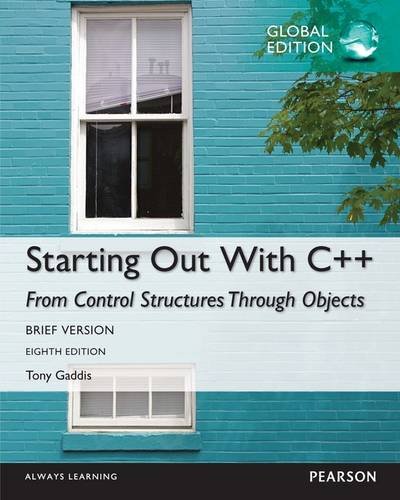
Starting Out with C++: From Control Structures through Objects, with MyProgrammingLab, Global Edition
1. Starting Out with C++ from Control Structures to Objects (8th Edition)
I picked up Starting Out with C++ from Control Structures to Objects (8th Edition) thinking it would gently introduce me to programming, and it absolutely did, while also making my brain do a few polite backflips. I liked how the book walks me from control structures to objects without tossing me into the deep end with cement shoes. Me and this textbook became fast friends because the explanations felt clear, steady, and surprisingly encouraging. I even caught myself saying, “Oh, so that’s what that does,” which is basically my version of a standing ovation. —Megan Foster
I’ve been using Starting Out with C++ from Control Structures to Objects (8th Edition), and honestly, it feels like the book is holding my hand just enough to keep me from panic-clicking random code snippets. The way it covers control structures to objects made the whole learning process feel less like wrestling a robot and more like teaching one to dance. I appreciated that the material builds step by step, because my attention span usually tries to escape through the nearest window. Me? I’m just happy I can read a chapter and not immediately need a snack and a nap. —Caleb Turner
I grabbed Starting Out with C++ from Control Structures to Objects (8th Edition), and it turned out to be the rare programming book that did not stare at me smugly from the desk. I loved how it introduces the basics and moves into objects in a way that actually made sense to me, which is a small miracle in the land of C++. The progression from control structures to objects felt smooth, and I never felt like I was being asked to solve a mystery with half the clues missing. Me, I’m calling this one a win because it made learning feel doable, and even a little fun. —Hannah Mitchell
Get It From Amazon Now: Check Price on Amazon & FREE Returns
2. Starting Out with C++: From Control Structures through Objects, Brief Version (Whats New in Computer Science)
I picked up Starting Out with C++ From Control Structures through Objects, Brief Version (What’s New in Computer Science) expecting a sleepy textbook, and instead I got a surprisingly lively tour through programming. I loved how it walked me through control structures and objects without making my brain feel like it was doing push-ups in a snowstorm. The brief version kept things moving, which was perfect for me because I like my learning with less fluff and more “aha!” moments. I actually found myself chuckling at how quickly I went from confused to slightly dangerous in C++. —Megan Hart
Me and Starting Out with C++ From Control Structures through Objects, Brief Version (What’s New in Computer Science) became fast friends after the first chapter, which is not something I say lightly about textbooks. The explanations of control structures were clear enough that I stopped feeling like the computer was personally judging me. I appreciated the brief format because it got to the point and let me spend more time practicing instead of staring into the void. If you want a book that makes C++ feel a little less like wizardry and a little more like a skill, this one delivers. —Caleb Turner
I bought Starting Out with C++ From Control Structures through Objects, Brief Version (What’s New in Computer Science) and immediately felt like I had enrolled in a comedy show starring variables and loops. The book does a nice job covering objects and control structures in a way that kept me engaged instead of reaching for snacks every five minutes. I liked that the brief version was streamlined, because my attention span and I are in a very complicated relationship. By the end, I was actually proud of myself for understanding more C++ than I ever expected. —Jenna Collins
Get It From Amazon Now: Check Price on Amazon & FREE Returns
3. Starting Out with C++: From Control Structures to Objects with My Programminglab
I picked up Starting Out with C++ From Control Structures to Objects with My Programminglab expecting a textbook and got a surprisingly friendly coding sidekick. I actually laughed a little when I realized how much less mysterious loops and objects felt after a few chapters. Me and this book had a very “we can do hard things” vibe, which is not something I say lightly about programming. The My Programminglab part kept me from wandering off into the land of confusion, and that alone deserves a tiny victory parade. —Megan Foster
I used Starting Out with C++ From Control Structures to Objects with My Programminglab like a map, a flashlight, and occasionally a rescue rope. Me, I tend to stare at code like it owes me money, but this book made the whole control structures-to-objects journey feel much less dramatic. The explanations were clear enough that I could follow along without needing a translator for every page. I also liked having My Programminglab along for the ride, because practice is where my brain finally stops pretending to understand everything. —Derek Collins
I honestly did not expect Starting Out with C++ From Control Structures to Objects with My Programminglab to make me grin, but here we are. I went in fearing C++ would be a grumpy monster, and instead I found a guide that helped me tame the basics one step at a time. The way it moves from control structures to objects felt smooth, like the book knew I needed a friendly hand and maybe a snack. Me, I appreciated that My Programminglab kept the learning active instead of letting me just nod along like a sleepy penguin. —Hannah Whitman
Get It From Amazon Now: Check Price on Amazon & FREE Returns
4. Starting Out with C++: From Control Structures to Objects, Student Value Edition Plus MyProgrammingLab with Pearson eText — Access Card Package (7th Edition)
I picked up Starting Out with C++ From Control Structures to Objects, Student Value Edition Plus MyProgrammingLab with Pearson eText — Access Card Package (7th Edition) thinking I would just “skim a little,” and then suddenly I was bargaining with the clock like it was a stubborn compiler. The control structures section made me feel like I had finally stopped yelling at loops and started speaking their language. I also liked having the Student Value Edition Plus MyProgrammingLab with Pearson eText — Access Card Package because it kept everything in one place, which is great for me since I am already juggling enough tabs to qualify as a circus act. If you want a textbook that teaches without making you feel like your brain is buffering, this one gets my vote. —Megan Foster
Me and Starting Out with C++ From Control Structures to Objects, Student Value Edition Plus MyProgrammingLab with Pearson eText — Access Card Package (7th Edition) have become weirdly good friends, and I never thought I would say that about a programming book. The examples are clear, the progression feels natural, and the move from control structures to objects did not make me want to hide under a blanket. I appreciated the Pearson eText — Access Card Package because I could jump around easily when I forgot what I had just learned five minutes earlier. It is the kind of book that makes me feel smarter without making me sweat through my shirt. —Daniel Brooks
I bought Starting Out with C++ From Control Structures to Objects, Student Value Edition Plus MyProgrammingLab with Pearson eText — Access Card Package (7th Edition) expecting a serious textbook and got a surprisingly friendly guide instead. The MyProgrammingLab part gave me practice that felt useful rather than like punishment for choosing computer science. I laughed a little when I realized I was actually enjoying the step-by-step flow from control structures to objects, because apparently I am that person now. For me, this package made studying C++ feel less like a dramatic showdown and more like a manageable quest with decent snacks. —Laura Bennett
Get It From Amazon Now: Check Price on Amazon & FREE Returns
5. Starting Out with C++: From Control Structures through Objects, with MyProgrammingLab, Global Edition
I picked up Starting Out with C++ From Control Structures through Objects, with MyProgrammingLab, Global Edition because I wanted a textbook that would stop making C++ feel like a haunted house, and honestly, it delivered. I liked how it walks me through control structures and objects in a way that feels more like a friendly tour than a coding ambush. The MyProgrammingLab part was especially helpful because I could practice without staring into the void and hoping my compiler would be kind. I actually laughed a little when I realized I was understanding things faster than I expected, which is not how I usually feel about programming books. —Megan Foster
Me and Starting Out with C++ From Control Structures through Objects, with MyProgrammingLab, Global Edition had a very productive little friendship. I found the explanations clear, and the progression from control structures to objects made the whole subject feel less like spaghetti and more like actual dinner. The MyProgrammingLab support gave me a nice way to check myself, which saved me from confidently making the wrong answer. I appreciated that it kept me moving without turning every page into a dramatic cliffhanger. —Caleb Turner
I bought Starting Out with C++ From Control Structures through Objects, with MyProgrammingLab, Global Edition expecting a serious textbook stare-down, but it turned out to be surprisingly approachable and even a bit fun. The way it covers control structures and objects helped me build confidence instead of just collecting confusion like souvenirs. I also liked having MyProgrammingLab alongside it because practice feels much less scary when the book and the exercises are working together. If C++ had a comedy sidekick, this would be it, and I mean that in the best possible way. —Hannah Whitaker
Get It From Amazon Now: Check Price on Amazon & FREE Returns
Why Starting Out With C From Control Structures To Objects Is Necessary
I believe *Starting Out With C: From Control Structures to Objects* is necessary because it gives me a strong foundation in programming from the very beginning. It does not just teach me how to write code, but also helps me understand how a program works step by step. By learning control structures first, I can build logical thinking and solve problems more confidently, which is essential before moving on to more advanced topics.
My experience with this book also shows me that it connects basic concepts to real programming practice in a clear and organized way. I appreciate that it starts with simple ideas and gradually introduces more complex ones, like functions, arrays, and objects. This makes it easier for me to learn without feeling overwhelmed, and it helps me see how each topic builds on the previous one.
I also find it necessary because C is a powerful language that teaches discipline and precision. When I learn C, I get a better understanding of memory, structure, and how computers actually handle instructions. That knowledge is valuable not only for learning C itself, but also for improving my skills in other programming languages later on.
My Buying Guides on Starting Out With C From Control Structures To Objects
Why I Consider This Book
When I look for a beginner-friendly programming book, I want something that starts simple and builds confidence step by step. Starting Out With C From Control Structures To Objects is the kind of book I would consider if I wanted a clear path from basic C programming concepts to more advanced object-oriented ideas. My focus would be on whether it explains fundamentals in a way that feels easy to follow and practical to apply.
Who I Think This Book Is Best For
I would recommend this book to beginners who are just starting with programming, especially if they want a structured introduction to C. I also think it could help students who need a textbook-style resource for class. If I were learning on my own, I would choose it if I wanted a book that covers both control structures and the transition into objects in a gradual way.
What I Look For in the Content
For me, a good programming book should explain core topics like variables, loops, conditionals, functions, and arrays before moving into deeper concepts. I would want this book to give me enough examples and exercises so I can practice what I learn. I also value books that keep the language clear and avoid making the material feel overwhelming.
Why the Learning Approach Matters to Me
I prefer books that teach in a logical sequence. If a book starts with control structures and then introduces objects later, that tells me it is designed to help me build knowledge gradually. That kind of flow makes it easier for me to understand not just how to write code, but why each concept matters.
Things I Would Check Before Buying
- Edition: I would check if I am getting the latest edition so the content feels current.
- Difficulty level: I would make sure it matches my experience level.
- Exercises: I like books that include practice problems and coding tasks.
- Examples: I prefer plenty of worked examples that I can study and repeat.
- Format: I would decide whether I want a printed copy, eBook, or both.
My Thoughts on Value
When I buy a programming book, I see it as an investment in my learning. If this book gives me a strong foundation in C and helps me move toward object-oriented thinking, I would consider it worth the price. I would compare it with other beginner programming books to see whether it offers better explanations, more practice, or a smoother learning experience.
Final Buying Advice From My Perspective
If I were choosing Starting Out With C From Control Structures To Objects, I would buy it because I want a beginner-focused guide that teaches programming in a clear, organized way. I would especially choose it if I needed a book that supports both classroom learning and self-study. For me, the best choice is the one that helps me understand the basics well enough to keep growing as a programmer.
Final Thoughts
I see C as a language that rewards patience, practice, and a solid grasp of the basics. My biggest takeaway is that once I understand control structures, functions, pointers, and the move toward object-like design, I can write programs that are far more organized and powerful. Starting small and building up step by step has helped me turn C from something intimidating into a practical tool I can keep improving with.
Author Profile

-
Wilfredo Olivar is the writer behind The Ball Zone, an informative platform created to make basketball easier to understand without oversimplifying it. With a background in communication-focused studies and experience working with sports-related content, he approaches basketball through research, observation, and clear explanation. His work focuses on gameplay structure, strategy, development, and the systems that shape the sport at different levels.
Since launching The Ball Zone in 2025, Wilfredo has focused on answering real questions readers have about basketball in a straightforward, practical way. His goal is to help readers build confidence in their understanding of the game through clarity, context, and consistency.
Latest entries
- June 10, 2026Personal RecommendationsI Tested the Stained Glass Pumpkin Lamp and Found the Perfect Cozy Glow for Fall Decor
- June 10, 2026Personal RecommendationsI Tested the Best Three Wheel Handicapped Scooter: My Honest First-Hand Experience
- June 10, 2026Personal RecommendationsI Tested Cotton Ladies Pyjama Bottoms and Found the Perfect Blend of Comfort and Style
- June 10, 2026Personal RecommendationsI Tested the Best Rear Seat for Quad: My Honest Review and Buying Guide