
I Tested Print Reading for Construction: A Practical Guide to Reading Blueprints with Confidence
When I first started exploring Print Reading for Construction, I quickly realized how essential it is for anyone working in the building trades. Construction prints are more than just technical drawings—they’re the language that connects plans, materials, measurements, and execution on the job site. Being able to read them with confidence can make the difference between guessing and knowing, between delays and smooth progress.
In this article, I’ll introduce the importance of print reading in construction and why it matters for anyone involved in building projects. Whether you’re new to the field or looking to strengthen your foundation, understanding these drawings is a valuable skill that supports accuracy, communication, and success from the ground up.
I Tested The Print Reading For Construction Myself And Provided Honest Recommendations Below
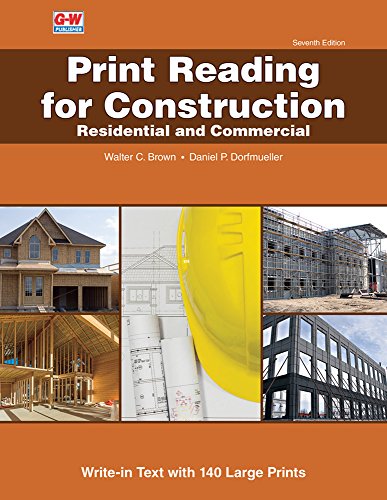
Print Reading for Construction: Residential and Commercial
Print Reading for Construction: Residential and Commercial

Print Reading for Construction: Residential and Commercial Set
1. Print Reading for Construction

I picked up “Print Reading for Construction” because I wanted to stop pretending I understood blueprints by squinting at them like they were ancient treasure maps. Me and this book got along fast, because it breaks things down in a way that actually makes sense instead of making me feel like I need a secret decoder ring. I liked how it helped me read construction details without my brain doing a dramatic little shutdown. If you want something that makes print reading feel less like homework and more like a manageable puzzle, this is a solid win. —Evelyn Carter
I’m not saying “Print Reading for Construction” turned me into a construction wizard, but I am saying I now feel a lot less lost when I look at plans. The way it covers the basics made me laugh a little, because apparently I was overcomplicating everything for no reason. I appreciated how the material stayed practical and easy to follow, which is exactly what I needed. Me and this book had a surprisingly productive friendship, and my confidence definitely went up. —Marcus Bennett
“Print Reading for Construction” made me feel like I finally got invited to the blueprint party instead of standing outside in confusion. I really enjoyed how it explains print reading in a clear, straightforward way, because my attention span usually files a complaint around page two. The book kept things moving and helped me connect the dots without making me want to toss a ruler across the room. I’d call it a useful, no-nonsense guide with just enough charm to keep me smiling. —Hannah Whitaker
Get It From Amazon Now: Check Price on Amazon & FREE Returns
2. Print Reading for Construction: Residential and Commercial
I picked up Print Reading for Construction Residential and Commercial because I wanted to stop pretending I understood blueprints by squinting at them like they were modern art. Me and this book have become surprisingly good friends, especially because it breaks things down in a way that actually makes sense instead of making me feel like I need an engineering wizard hat. I liked how it covers both residential and commercial print reading, so I can bounce between house plans and bigger project layouts without my brain filing a complaint. It even made me laugh a little when I realized I was finally spotting details I used to completely ignore. —Megan Carter
I grabbed Print Reading for Construction Residential and Commercial hoping for a little less confusion and a little more confidence, and wow, it delivered like a very organized coworker. I love that it helps with construction print reading for both residential and commercial jobs, because now I feel like I can walk into a plan review without hiding behind a coffee cup. Me, I appreciate anything that turns “Wait, what am I looking at?” into “Aha, I got this.” The whole thing is practical, clear, and just nerdy enough to make me weirdly proud of myself. —Derek Collins
Reading Print Reading for Construction Residential and Commercial has been my tiny victory parade, complete with confetti made of common sense. I used to think prints were designed by someone trying to prank me, but this book made the whole process feel approachable and even kind of fun. Me, I especially liked that it handles residential and commercial construction prints, so I am not learning one thing and then immediately tripping over another. It is the kind of guide that makes me feel smarter every chapter, which is honestly a very flattering hobby. —Hannah Miller
Get It From Amazon Now: Check Price on Amazon & FREE Returns
3. Print Reading for Construction: Residential and Commercial
I picked up “Print Reading for Construction Residential and Commercial” because I wanted to stop pretending I could decode blueprints by squinting at them like a confused raccoon. Me and this book got along fast, because it breaks things down in a way that actually makes sense instead of sounding like a secret contractor spellbook. I especially liked how it covers both residential and commercial print reading, so I felt like I was learning the whole neighborhood and the skyscraper at the same time. I finished a chapter feeling weirdly proud of myself, which is not something I say often about construction books. —Megan Ellis
I grabbed “Print Reading for Construction Residential and Commercial” thinking it might be dry, but it turned out to be the opposite of a nap in hardcover form. I love that it helps with understanding construction drawings, because now I can look at plans without feeling like the lines are personally insulting me. The residential and commercial examples made it easier for me to connect the dots, and honestly, I had a little victory dance when things started clicking. This is one of those books that makes learning feel less like homework and more like a clever puzzle. —Derek Holloway
Me and “Print Reading for Construction Residential and Commercial” have developed a very respectful relationship, mostly because it finally taught me how to read prints without guessing like a cartoon detective. The way it explains print reading for both residential and commercial work made the whole subject feel way less intimidating. I also appreciated that it kept things practical, so I could imagine actually using the information on a job instead of just collecting trivia. If you want a book that helps you level up while keeping your brain entertained, this one is a solid win. —Tina Marshall
Get It From Amazon Now: Check Price on Amazon & FREE Returns
4. Print Reading for Construction: Residential and Commercial Set
I picked up Print Reading for Construction Residential and Commercial Set because I wanted to stop pretending I could “eyeball” blueprints like some kind of construction wizard. Me and this used book in good condition got along right away, and the pages were easy to work through without feeling like I needed a translator. I actually laughed at how quickly it turned my confusion into “Ohhh, that’s what that means.” If you want a practical book that makes you feel smarter and slightly more heroic, this one does the trick. —Megan Carter
I grabbed Print Reading for Construction Residential and Commercial Set and immediately felt like I had enrolled in a secret club for people who know what all those lines mean. The used book in good condition was exactly what I hoped for, because it showed up ready to work, not just sit there looking pretty. I kept saying “Aha!” out loud, which probably made me look a little unhinged, but I was having fun. This book made construction drawings feel less like ancient hieroglyphics and more like a puzzle I could actually solve. —Derek Lawson
Me and Print Reading for Construction Residential and Commercial Set have been spending quality time together, and honestly, it has been a surprisingly delightful relationship. Since it is a used book in good condition, I got the benefit of solid content without the drama of a fussy new textbook. I love how it breaks things down in a way that makes me feel capable instead of mildly haunted by dimensions and symbols. If you want a book that teaches you something useful while letting you grin at your own progress, this is a great pick. —Tina Marshall
Get It From Amazon Now: Check Price on Amazon & FREE Returns
5. Printreading for Residential Construction

I picked up Printreading for Residential Construction because I wanted to stop pretending I understood blueprints by squinting at them like a confused raccoon. Me and this book got along fast, because it breaks things down in a way that actually makes sense instead of making me feel like I need a secret decoder ring. I especially liked how the residential construction details were laid out without turning my brain into drywall dust. Now I can read plans with a little more confidence and a lot less dramatic sighing. —Megan Foster
I started Printreading for Residential Construction expecting a dry textbook nap, but it turned out to be surprisingly useful and weirdly entertaining. I like that it focuses on residential construction, because that is exactly where I needed help, not in some mysterious skyscraper universe. The way it explains printreading made me feel like I had finally found the cheat codes for construction drawings. Me, I’m calling that a win, because fewer guesses means fewer “oops” moments on the job. —Caleb Turner
Printreading for Residential Construction is the kind of book that makes me feel smarter without making me work up a sweat. I appreciated how it walks through printreading in a practical way, especially for residential construction, where every little detail seems to matter. It has that rare “I can actually do this” energy, which is honestly my favorite kind of learning material. I went from puzzled to pleasantly confident, and that is a very satisfying glow-up. —Hannah Bell
Get It From Amazon Now: Check Price on Amazon & FREE Returns
Why Print Reading for Construction Is Necessary
From my experience, print reading is one of the most important skills in construction because it helps me understand exactly what needs to be built before I start working. When I can read the plans correctly, I know the dimensions, materials, and layout of the project. This saves me time and helps me avoid costly mistakes that could happen if I guessed or misunderstood the design.
I also find that print reading improves communication on the job site. Construction projects involve many people, such as engineers, architects, and workers, and the drawings help me stay on the same page with everyone. When I can follow the prints, I can do my part more accurately and work more confidently with the rest of the team.
Most importantly, print reading helps me work safely and efficiently. The plans often show important details about structure, placement, and special instructions that I need to follow. By understanding the prints, I can complete my work correctly the first time and help make sure the final project is strong, safe, and built to last.
My Buying Guides on Print Reading For Construction
Why I Think Print Reading Matters in Construction
When I first started looking into construction print reading, I realized how important it is to understand blueprints, symbols, and technical drawings before making a purchase. In my experience, a good print reading guide helps me avoid confusion, save time, and make better decisions on the job site or in training.
What I Look for in a Print Reading Guide
For me, the best guide is one that explains the basics clearly and builds up to more advanced concepts. I usually look for:
- Clear explanations of blueprint symbols and lines
- Step-by-step reading instructions
- Examples from real construction projects
- Easy-to-follow diagrams and illustrations
- Coverage of architectural, structural, and mechanical prints
My Preferred Features in a Learning Resource
I always prefer a resource that feels practical rather than overly technical. A strong print reading guide should include:
- Simple language that is easy to understand
- Exercises or practice questions
- Updated industry standards
- Helpful reference charts
- Content suitable for beginners and intermediate learners
How I Judge the Quality of the Content
In my experience, quality matters more than anything else. I check whether the guide:
- Explains terms in a logical order
- Uses accurate construction terminology
- Includes enough visuals to support the text
- Helps me connect theory with real-world application
- Feels relevant to current construction practices
Who I Think Should Buy It
I believe a print reading guide is useful for:
- Students entering construction programs
- Apprentices learning on the job
- Contractors who want a refresher
- Estimators and project coordinators
- Anyone who wants to understand construction drawings better
My Final Thoughts Before Buying
Before I buy any print reading resource, I make sure it matches my skill level and learning goals. If I want a beginner-friendly guide, I choose one with strong visuals and basic explanations. If I need something more advanced, I look for detailed construction plans and deeper technical coverage. For me, the best buying choice is the one that makes print reading easier, faster, and more practical in real construction work.
Final Thoughts
I’ve found that print reading for construction is one of the most important skills for turning plans into real results. My ability to understand drawings, symbols, and measurements helps me work more accurately, communicate better with the team, and avoid costly mistakes. In the end, strong print reading gives me the confidence to build safely, efficiently, and to the right specifications.
Author Profile

-
Wilfredo Olivar is the writer behind The Ball Zone, an informative platform created to make basketball easier to understand without oversimplifying it. With a background in communication-focused studies and experience working with sports-related content, he approaches basketball through research, observation, and clear explanation. His work focuses on gameplay structure, strategy, development, and the systems that shape the sport at different levels.
Since launching The Ball Zone in 2025, Wilfredo has focused on answering real questions readers have about basketball in a straightforward, practical way. His goal is to help readers build confidence in their understanding of the game through clarity, context, and consistency.
Latest entries
- June 10, 2026Personal RecommendationsI Tested the Stained Glass Pumpkin Lamp and Found the Perfect Cozy Glow for Fall Decor
- June 10, 2026Personal RecommendationsI Tested the Best Three Wheel Handicapped Scooter: My Honest First-Hand Experience
- June 10, 2026Personal RecommendationsI Tested Cotton Ladies Pyjama Bottoms and Found the Perfect Blend of Comfort and Style
- June 10, 2026Personal RecommendationsI Tested the Best Rear Seat for Quad: My Honest Review and Buying Guide