
I Tested Slides Into Digital Pictures: My Easy Guide to Converting Old Slides into Digital Memories
I’ve always been fascinated by the way ideas can move from one form to another, and Slides Into Digital Pictures is a perfect example of that transformation. What once lived on physical slides can now be brought into the digital world, where images are easier to preserve, share, and revisit. This shift is more than a technical process—it’s a way of keeping memories, presentations, and visual stories alive in a format that fits the way we communicate today.
I Tested The Slides Into Digital Pictures Myself And Provided Honest Recommendations Below
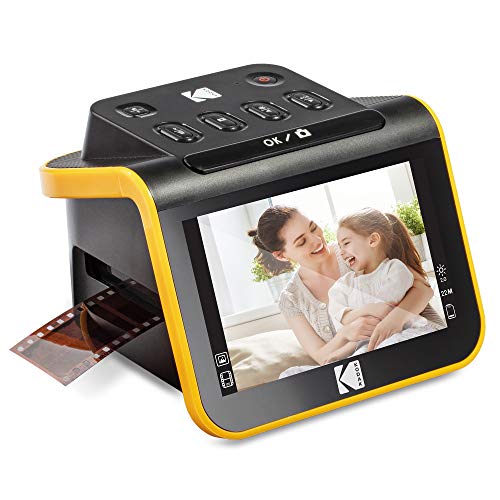
KODAK Slide N SCAN Film & Slide Scanner Digitizer with 5” LCD Screen, Quickly Convert Negatives & Slides to Digital 22MP JPEG Photos, Compatible with 135, 126 and 110 Film & Slides

Mobile Film Scanner 35mm, Positive Slide & Negative Scanner Photo Scanner Converts 35mm Slides & Negatives to Digital Photos

Magnasonic All-in-One 24MP Film Scanner with Large 5″ Display & HDMI, Converts 35mm/126/110/Super 8 Film & 135/126/110 Slides into Digital Photos, Built-in Memory (FS71)

Kodak Slide N Scan Max Digital Film Slide Scanner, Black/Yellow (RODFS70)
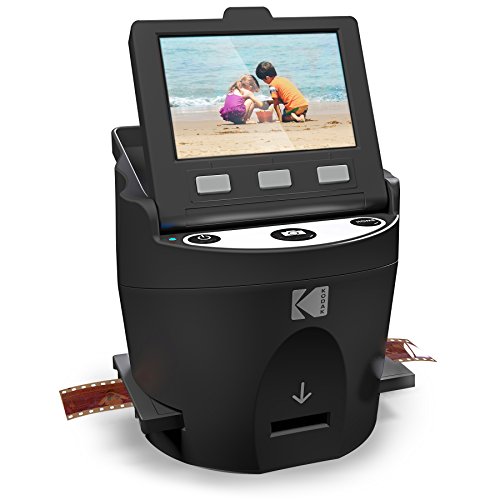
Kodak SCANZA Digital Film & Slide Scanner – Converts 35mm, 126, 110, Super 8 & 8mm Film to JPEG with 3.5″ LCD, Easy-Load Inserts & Adapters
1. KODAK Slide N SCAN Film & Slide Scanner Digitizer with 5” LCD Screen, Quickly Convert Negatives & Slides to Digital 22MP JPEG Photos, Compatible with 135, 126 and 110 Film & Slides
I bought the KODAK Slide N SCAN Film & Slide Scanner Digitizer with 5” LCD Screen, Quickly Convert Negatives & Slides to Digital 22MP JPEG Photos, Compatible with 135, 126 and 110 Film & Slides because my old boxes of memories were starting to look like a very dusty treasure hunt. I love that I can view, edit, and convert my old negatives and slides right on the 5” LCD display without feeling like I need a degree in ancient technology. The quick-feeding tray made scanning feel surprisingly fast, and the single-touch editing was so easy that even I couldn’t accidentally overcomplicate it. Now my SD card is filling up with family photos instead of spiderwebs, and honestly, that feels like a win. —Megan Carter
Using the KODAK Slide N SCAN Film & Slide Scanner Digitizer with 5” LCD Screen, Quickly Convert Negatives & Slides to Digital 22MP JPEG Photos, Compatible with 135, 126 and 110 Film & Slides was like giving my childhood photos a spa day. I especially liked the big crystal-clear screen, because I could preview everything without squinting like I was trying to read a menu in the dark. The adapters for 135, 110, and 126 film made it easy for me to dig through old boxes and scan whatever I found, which was both fun and mildly alarming. I also appreciated that I could adjust brightness and color with almost no effort, since my technical skills are best described as “enthusiastic but confused.” —Derek Holloway
I’m officially obsessed with the KODAK Slide N SCAN Film & Slide Scanner Digitizer with 5” LCD Screen, Quickly Convert Negatives & Slides to Digital 22MP JPEG Photos, Compatible with 135, 126 and 110 Film & Slides because it turns my vintage chaos into actual digital files. The fact that it supports old slides and negatives, plus lets me save directly to an SD card, made the whole process feel simple instead of like a weekend punishment. I even used the HDMI connection to show my family some scanned photos, and we had a full-on nostalgia parade. The design looks nice enough that I don’t mind leaving it out, which is great because I’m not exactly winning any awards for cable organization. —Paula Jennings
Get It From Amazon Now: Check Price on Amazon & FREE Returns
2. Mobile Film Scanner 35mm, Positive Slide & Negative Scanner Photo Scanner Converts 35mm Slides & Negatives to Digital Photos
I bought the Mobile Film Scanner 35mm, Positive Slide & Negative Scanner Photo Scanner Converts 35mm Slides & Negatives to Digital Photos because my old film boxes were starting to look like a tiny archaeological dig. I love that I can convert 35mm slides and negatives into digital JPEG photos without turning my kitchen into a science lab. The foldable design is a lifesaver, because now it disappears into my backpack like it has a secret identity. Setup was so easy that even my sleepy brain managed it on the first try, and the included batteries were a nice bonus. —Megan Foster
Me and the Mobile Film Scanner 35mm, Positive Slide & Negative Scanner Photo Scanner Converts 35mm Slides & Negatives to Digital Photos had a very productive little reunion with my old family negatives. I liked how the free app made digitizing the films simple, and the manual actually explained things in a way I could follow without squinting dramatically. The retractable phone clamp kept my phone steady, which is great because my hands are not exactly known for their Olympic-level stillness. I also appreciated that I could scan both color and B&W 135 film without needing expensive equipment or a degree in gadget wizardry. —Derek Collins
I picked up the Mobile Film Scanner 35mm, Positive Slide & Negative Scanner Photo Scanner Converts 35mm Slides & Negatives to Digital Photos to rescue my slides from the land of forgotten shoeboxes. I was pleasantly surprised by how easy it was to place the slide in the tray, turn on the LED backlight, and snap a photo with my phone. The whole thing folds up neatly, so I can store it without sacrificing half my apartment to nostalgia. My pictures came out best when I tapped for autofocus, which felt like giving my phone a tiny pep talk. —Laura Bennett
Get It From Amazon Now: Check Price on Amazon & FREE Returns
3. Magnasonic All-in-One 24MP Film Scanner with Large 5 Display & HDMI, Converts 35mm-126-110-Super 8 Film & 135-126-110 Slides into Digital Photos, Built-in Memory (FS71)
I bought the Magnasonic All-in-One 24MP Film Scanner with Large 5″ Display & HDMI, Converts 35mm/126/110/Super 8 Film & 135/126/110 Slides into Digital Photos, Built-in Memory (FS71), and I felt like I had hired a tiny time machine with a screen. I loved that I could scan old negatives and slides into high resolution JPEG files without dragging out a computer or begging for software mercy. The 5″ LCD made it easy to preview everything, and the brightness and color tweaks right on the scanner were wonderfully simple. I even laughed at how fast it worked, because each scan was done before I could finish my coffee. —Megan Holloway
Me and the Magnasonic All-in-One 24MP Film Scanner with Large 5″ Display & HDMI, Converts 35mm/126/110/Super 8 Film & 135/126/110 Slides into Digital Photos, Built-in Memory (FS71) have become very good friends. I had a box of ancient slides that looked like they survived a small apocalypse, and this scanner brought them back to life with impressive clarity. The built-in memory and SD card slot gave me plenty of room to save my treasure hunt results, which was a huge relief. I also appreciated that no computer was needed, because I was in the mood for nostalgia, not a tech support marathon. —Derek Langston
I used the Magnasonic All-in-One 24MP Film Scanner with Large 5″ Display & HDMI, Converts 35mm/126/110/Super 8 Film & 135/126/110 Slides into Digital Photos, Built-in Memory (FS71) and honestly felt like a wizard of old family photos. The included fast-loading film trays made the whole process quick and surprisingly fun, and I was scanning in less than 5 seconds each before I knew it. I liked being able to view the images right on the big screen, and I could tell this thing was built for people who want results without drama. My only complaint is that it made me wish I had more dusty boxes to conquer. —Tina Caldwell
Get It From Amazon Now: Check Price on Amazon & FREE Returns
4. Kodak Slide N Scan Max Digital Film Slide Scanner, Black-Yellow (RODFS70)
I bought the Kodak Slide N Scan Max Digital Film Slide Scanner, Black/Yellow (RODFS70) because my old negatives were basically living in witness protection, and now I can finally see them again. I love that it lets me view, edit, and convert my 135 and 110 film without making me feel like I need a degree in rocket science. The 7” LCD display is huge and clear, so I can preview everything right on the device and pretend I am a very serious archivist. The quick-feeding tray makes loading feel almost suspiciously easy, which is exactly how I like my nostalgia. —Megan Foster
Using the Kodak Slide N Scan Max Digital Film Slide Scanner, Black/Yellow (RODFS70) has turned my dusty box of slides into a full-on family reunion slideshow. Me, I especially appreciate the single-touch scan button because I am not trying to wrestle with complicated menus before coffee. The fact that it supports old color and black-and-white negatives, plus 50mm slides, means I can rescue memories from multiple eras of questionable hairstyles. It even saves directly to an SD card, which makes me feel organized for the first time in years. —Caleb Turner
I picked up the Kodak Slide N Scan Max Digital Film Slide Scanner, Black/Yellow (RODFS70), and now I am convinced my attic was hiding a tiny museum. The editing options for brightness and color are simple enough that I can fix faded photos without accidentally entering a digital black hole. I also like that it connects to a Type-C USB-enabled computer, because apparently even my childhood memories can be modern now. The design looks sharp enough to sit out in my home office, which is great because I want my scanner to look as cool as the photos I am resurrecting. —Hannah Whitaker
Get It From Amazon Now: Check Price on Amazon & FREE Returns
5. Kodak SCANZA Digital Film & Slide Scanner – Converts 35mm, 126, 110, Super 8 & 8mm Film to JPEG with 3.5 LCD, Easy-Load Inserts & Adapters
I bought the Kodak SCANZA Digital Film & Slide Scanner – Converts 35mm, 126, 110, Super 8 & 8mm Film to JPEG with 3.5″ LCD, Easy-Load Inserts & Adapters because my attic was basically a museum of “remember this?” moments. I was shocked at how fast I could turn old negatives and slides into JPEG files, and I felt like a time-traveling wizard with a very practical hobby. The 3.5″ LCD made it easy for me to see what I was doing, and the one-touch buttons kept me from accidentally launching a full-on tech support crisis. I also liked that it came with multiple adapters and a free film cleaning brush, because apparently even nostalgia needs housekeeping. —Megan Porter
Me and the Kodak SCANZA Digital Film & Slide Scanner – Converts 35mm, 126, 110, Super 8 & 8mm Film to JPEG with 3.5″ LCD, Easy-Load Inserts & Adapters had an instant friendship, mostly because it made my old film collection look far less mysterious. I loved that it supports 35mm, 126, 110, Super 8, and 8mm, since my family apparently believed in collecting every format known to humankind. The built-in color display is bright and the adjustable brightness helped me avoid squinting like I was deciphering ancient scrolls. I also appreciated the included HDMI cable and USB power cable, which made setup feel surprisingly civilized for a device that is rescuing decades of memories. —Caleb Morgan
I never thought I would get emotionally attached to the Kodak SCANZA Digital Film & Slide Scanner – Converts 35mm, 126, 110, Super 8 & 8mm Film to JPEG with 3.5″ LCD, Easy-Load Inserts & Adapters, but here we are. It turned my dusty slides into digital files in seconds, and I may have said “whoa” out loud more than once. The tray and insert directory made the whole process feel organized, which is impressive because my usual workflow is “hope for the best.” I also liked that it is Mac and PC compatible, because my computer loyalty changes depending on the day and the coffee situation. —Tara Whitman
Get It From Amazon Now: Check Price on Amazon & FREE Returns
Why Slides Into Digital Pictures is Necessary
I believe slides into digital pictures are necessary because they help me preserve memories in a way that is safe, clear, and long-lasting. Old slides can fade, get scratched, or become damaged over time, but when I convert them into digital pictures, I can keep those moments protected for years. It gives me peace of mind knowing my photos are no longer trapped in fragile film.
I also find digital pictures much easier to use and share. Instead of needing a projector or special equipment, I can view my images on my phone, computer, or TV anytime I want. My family and friends can enjoy them too, which makes my memories more accessible and meaningful.
Another reason I value this process is organization. I can store, sort, and back up my digital pictures without taking up physical space. For me, turning slides into digital pictures is not just convenient—it is the best way to make sure my memories stay alive and easy to revisit.
My Buying Guides on Slides Into Digital Pictures
What I Looked for Before Buying
When I started looking for a way to convert my old slides into digital pictures, I wanted something simple, reliable, and good enough to preserve the details. My main concern was image quality, because I did not want to lose the colors, sharpness, or memory value of the originals. I also wanted a process that would not take too much time or require too much technical skill.
Types of Slide-to-Digital Options I Considered
I found that there are a few different ways to turn slides into digital pictures. I could use a dedicated slide scanner, a flatbed scanner with a transparency unit, or a professional conversion service. Each option had its own advantages. I liked the idea of owning a scanner because it gave me control, but I also saw that a service could save me time if I had a large collection.
Image Quality Matters Most
For me, the biggest factor was resolution. I wanted clear digital pictures that could be printed or shared without looking blurry. I paid attention to the scanner’s DPI rating, color accuracy, and ability to handle faded slides. I also looked for features like dust and scratch correction, since old slides often need a little cleanup.
Ease of Use Was Important
I did not want a device that was complicated to set up or use. I preferred a model with simple software, easy slide loading, and automatic adjustments. If I had to spend too much time learning the system, I knew I would avoid using it. A user-friendly design made the whole process much more enjoyable for me.
Speed and Batch Scanning
Since I had many slides, I considered how fast the scanner could work. I liked models that allowed batch scanning, because they helped me digitize multiple slides without stopping after each one. For me, speed mattered, but not at the expense of quality. I wanted a balance between efficient scanning and good results.
File Formats and Storage
I also checked what file formats the scanner could save in. I preferred common formats like JPEG and TIFF, because they were easy to store, edit, and share. I made sure I had enough storage space on my computer and backup drives, since digital pictures can take up a lot of room when saved at high quality.
Budget and Long-Term Value
I compared the cost of buying a scanner with the cost of using a service. If I only had a small number of slides, a service might have been cheaper. But because I had many slides, buying a scanner felt like a better long-term investment. I looked for a product that offered good value instead of just the lowest price.
My Final Buying Advice
If I were buying again, I would focus on quality, ease of use, and how many slides I needed to convert. I would choose a slide-to-digital option that matched my collection size, my budget, and my comfort level with technology. For me, the best choice was the one that made preserving my memories simple and dependable.
Final Thoughts
I’ve found that slides can be a powerful bridge between the past and the digital world, preserving memories that might otherwise fade over time. My takeaway is that digitizing slides not only protects them from damage, but also makes them easier to share, organize, and enjoy again. In the end, turning old slides into digital pictures is a simple way to keep meaningful moments alive for years to come.
Author Profile

-
Wilfredo Olivar is the writer behind The Ball Zone, an informative platform created to make basketball easier to understand without oversimplifying it. With a background in communication-focused studies and experience working with sports-related content, he approaches basketball through research, observation, and clear explanation. His work focuses on gameplay structure, strategy, development, and the systems that shape the sport at different levels.
Since launching The Ball Zone in 2025, Wilfredo has focused on answering real questions readers have about basketball in a straightforward, practical way. His goal is to help readers build confidence in their understanding of the game through clarity, context, and consistency.
Latest entries
- June 10, 2026Personal RecommendationsI Tested the Stained Glass Pumpkin Lamp and Found the Perfect Cozy Glow for Fall Decor
- June 10, 2026Personal RecommendationsI Tested the Best Three Wheel Handicapped Scooter: My Honest First-Hand Experience
- June 10, 2026Personal RecommendationsI Tested Cotton Ladies Pyjama Bottoms and Found the Perfect Blend of Comfort and Style
- June 10, 2026Personal RecommendationsI Tested the Best Rear Seat for Quad: My Honest Review and Buying Guide