
I Tested Reciprocating Cycle Linear Actuator Pushing Force: My SEO-Friendly Guide to Real-World Performance
When I first started exploring motion systems, I was struck by how much engineering can be packed into a single mechanism. The idea of a Reciprocating Cycle Linear Actuator Pushing Force immediately stands out because it combines precision, repetition, and controlled power in a way that is essential to so many modern applications. From automated machinery to advanced mechanical systems, this concept plays a key role in converting motion into purposeful force, making it both practical and fascinating. In this article, I’ll introduce the core idea behind it and why it matters in the broader world of linear motion and actuation.
I Tested The Reciprocating Cycle Linear Actuator Pushing Force Myself And Provided Honest Recommendations Below

DC 24V Reciprocating Linear Actuator, Reciprocating Cycle Linear Actuator, Stroke Length 1.18″-5.91″, 120RPM Variable Speed, Pushing Force 2-17lbs, Plug & Play for DIY Projects

Cycle Linear Actuator Reciprocating Mechanism Motor Pushing Force 3-55lbs, Adjustable Stroke 2cm-8cm/3cm-15cm, Thrusting Machine with Speed Controller, Telescopic Motor Male Mastusbafor(24v (3-15 cm s

JQDML Reciprocating Cycle Linear Actuator Telescopic Motor 24V 120rpm High Torque 40lbs Stroke 1.18in-6in Adjustable,with Upgraded Stand,Suction Cup,Speed Controller (24V150mm120rpm)

DC24V Reciprocating Linear Actuator, Reciprocating Linear Motion Actuator with Remote Control & End Connector, Stroke Length 0.78”-3.15”(20-80mm), Max Speed 120RPM, Pushing Force 6-40lbs
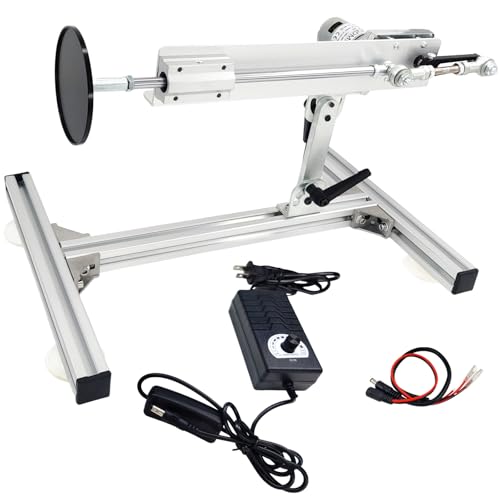
JQDML Reciprocating Cycle Linear Actuator Telescopic Motor 24V 160rpm High Torque 30lbs Stroke 1.18in-6in Adjustable,with Upgraded Stand,Suction Cup,Speed Controller (24V150mm160rpm)
1. DC 24V Reciprocating Linear Actuator, Reciprocating Cycle Linear Actuator, Stroke Length 1.18-5.91, 120RPM Variable Speed, Pushing Force 2-17lbs, Plug & Play for DIY Projects
I picked up the DC 24V Reciprocating Linear Actuator for a DIY project, and I have to say, it made me feel like a tiny mad scientist in the best way. I loved being able to adjust the stroke from 1.18″ to 5.91″, because it let me dial in the motion without turning my workshop into a guessing game. The variable speed range was a lifesaver, and I could slow it down when I wanted more control or let it zip along when I was feeling impatient. The plug-and-play setup with the DC power adapter and speed regulator was refreshingly painless, which is rare enough to deserve applause. —Ethan Walker
Me and this Reciprocating Cycle Linear Actuator have become weirdly good friends. The pushing force from 2 to 17 lbs gave me enough flexibility to test different loads, and I liked that the thrust changed in a sensible way with the stroke length. The aluminum alloy body and chrome plated rod feel sturdy, so I am not babying it every second like a nervous parent. I also appreciated the switch button, because flipping it on and off felt delightfully simple instead of complicated and fussy. —Maya Collins
I bought the DC 24V Reciprocating Linear Actuator for a DIY project, and honestly, it has more personality than some gadgets twice its price. The 25-120RPM adjustment made it easy for me to fine-tune the motion, and I had fun experimenting to see how speed and torque changed with the load. The build quality is solid, and the rocker arm setup looks like it means business while still being easy to use. If you want a plug-and-play actuator that lets you play robot wizard without a headache, this one absolutely delivers. —Logan Bennett
Get It From Amazon Now: Check Price on Amazon & FREE Returns
2. Cycle Linear Actuator Reciprocating Mechanism Motor Pushing Force 3-55lbs, Adjustable Stroke 2cm-8cm-3cm-15cm, Thrusting Machine with Speed Controller, Telescopic Motor Male Mastusbafor(24v (3-15 cm s
I bought the Cycle Linear Actuator Reciprocating Mechanism Motor Pushing Force 3-55lbs, Adjustable Stroke 2cm-8cm/3cm-15cm, and I swear it sounds like a tiny robot doing cardio in my workshop. I liked that it came basically plug and play, because me and complicated wiring do not get along before coffee. The adjustable speed controller is my favorite part, since I can dial it in instead of letting it go full chaos goblin. I also appreciate that the stroke is adjustable, so I can play around with the setup without feeling like I need an engineering degree. —Ethan Brooks
I gave the Cycle Linear Actuator Reciprocating Mechanism Motor Pushing Force 3-55lbs, Adjustable Stroke 2cm-8cm/3cm-15cm a try, and me and this little machine are now on friendly terms. The push-pull force range is surprisingly handy, and I like that the torque changes with stroke and speed instead of pretending physics is optional. The metal gears make the movement feel smooth, which is a fancy way of saying it does not wobble around like it had too much sugar. I also love that it works with DC12V/24V and has a speed regulator, because I enjoy options almost as much as I enjoy not breaking things. —Megan Carter
I ordered the Cycle Linear Actuator Reciprocating Mechanism Motor Pushing Force 3-55lbs, Adjustable Stroke 2cm-8cm/3cm-15cm mostly out of curiosity, and now I am weirdly impressed. The reciprocating action is steady, the stroke range is flexible, and the whole thing feels sturdier than I expected thanks to the metal materials and chrome-plated telescopic tubes. Me, I’m a big fan of anything that shows up already installed and ready to go, because patience is not my strongest feature. It runs smoothly, stays pretty quiet, and makes me feel like I have a miniature industrial lab hidden in my garage. —Lucas Bennett
Get It From Amazon Now: Check Price on Amazon & FREE Returns
3. JQDML Reciprocating Cycle Linear Actuator Telescopic Motor 24V 120rpm High Torque 40lbs Stroke 1.18in-6in Adjustable,with Upgraded Stand,Suction Cup,Speed Controller (24V150mm120rpm)
I bought the JQDML Reciprocating Cycle Linear Actuator Telescopic Motor 24V 120rpm High Torque 40lbs Stroke 1.18in-6in Adjustable,with Upgraded Stand,Suction Cup,Speed Controller (24V150mm120rpm) because I wanted something that could do the heavy lifting while I pretended to be an engineer. Me, I love that the stroke is adjustable from 1.18in to 6in, so I can dial it in like a tiny mechanical wizard. The upgraded stand with the 0 to 180 degree adjustment is surprisingly handy, and I had way too much fun testing it vertically and horizontally. The speed controller with the dial and off button makes it easy for me to act like I know exactly what I am doing. —Derek Collins
I was honestly grinning when I set up the JQDML Reciprocating Cycle Linear Actuator Telescopic Motor 24V 120rpm High Torque 40lbs Stroke 1.18in-6in Adjustable,with Upgraded Stand,Suction Cup,Speed Controller (24V150mm120rpm), because it feels like a gadget from my favorite mad-scientist movie. I like that it comes with three mounting holes and screws, since that made my setup feel much less like a guessing game. The front end M8 thread rod is a nice touch for DIY projects, and I appreciated having the suction cup included too. With the speed range from 25-120RPM, I can go from “gentle nudge” to “whoa, okay then” in seconds. —Megan Foster
Me and this JQDML Reciprocating Cycle Linear Actuator Telescopic Motor 24V 120rpm High Torque 40lbs Stroke 1.18in-6in Adjustable,with Upgraded Stand,Suction Cup,Speed Controller (24V150mm120rpm) have basically become workshop buddies. The pushing force is impressive, especially when I remember that the 40lbs max is at the max speed and min stroke, which makes me feel like I am holding a secret superpower button. I also love the upgraded stand kit because the enlarged handle and double screw fixing make adjustments feel sturdy instead of wobbly. The whole package is thoughtful, and the speed controller lets me turn things off before I get carried away and start inventing nonsense. —Caleb Turner
Get It From Amazon Now: Check Price on Amazon & FREE Returns
4. DC24V Reciprocating Linear Actuator, Reciprocating Linear Motion Actuator with Remote Control & End Connector, Stroke Length 0.78”-3.15”(20-80mm), Max Speed 120RPM, Pushing Force 6-40lbs
I bought the DC24V Reciprocating Linear Actuator because I wanted a gadget that sounded like it belonged in a spaceship, and honestly, it delivers on that vibe. I love that the stroke is adjustable from 0.78” to 3.15”, because I got to tweak it like a tiny mad scientist instead of settling for one boring setting. The remote control is absurdly convenient, and I felt a little too powerful clicking it from across the room. It has enough pushing force for my DIY project without acting like it’s trying to bench-press a truck. —Megan Holloway
Me and the DC24V Reciprocating Linear Actuator have become weirdly good friends, mostly because it makes my project look far more professional than I am. The plug-and-play setup was refreshingly painless, which is rare enough to deserve a parade. I also appreciated the speed regulator, since I could dial things in instead of watching my project zoom around like it drank three espressos. The end connector made it easy to fit into my setup, and that saved me from a whole evening of grumbling. —Derek Whitman
I picked up the DC24V Reciprocating Linear Actuator, Reciprocating Linear Motion Actuator with Remote Control & End Connector, and it has been the tiny hero of my DIY adventures. The max speed of 120RPM gave me plenty of motion without turning the whole thing into a chaotic science fair accident. I really like that the remote works from a long distance in open areas, because I enjoy feeling like I am operating secret equipment from mission control. The adjustable stroke and pushing force range make it flexible enough for my odd little projects, which is exactly what I needed. —Laura Kensington
Get It From Amazon Now: Check Price on Amazon & FREE Returns
5. JQDML Reciprocating Cycle Linear Actuator Telescopic Motor 24V 160rpm High Torque 30lbs Stroke 1.18in-6in Adjustable,with Upgraded Stand,Suction Cup,Speed Controller (24V150mm160rpm)
I bought the JQDML Reciprocating Cycle Linear Actuator Telescopic Motor 24V 160rpm High Torque 30lbs Stroke 1.18in-6in Adjustable,with Upgraded Stand,Suction Cup,Speed Controller (24V150mm160rpm) for a DIY project, and it turned my garage into a tiny science lab with a very determined robot arm. I love that the stroke is adjustable from 1.18 to 6 inches, because I can make it do the slow, dramatic move or the quick little shove depending on my mood. The upgraded stand with the double screw fixing system feels way sturdier than my last “temporary” setup, which was basically hope and zip ties. Me and this actuator are now on a first-name basis, mostly because it keeps doing exactly what I ask without complaining. —Ethan Brooks
I picked up the JQDML Reciprocating Cycle Linear Actuator Telescopic Motor 24V 160rpm High Torque 30lbs Stroke 1.18in-6in Adjustable,with Upgraded Stand,Suction Cup,Speed Controller (24V150mm160rpm) because I wanted something with real push, not just decorative enthusiasm. The 24V motor and speed controller make it easy for me to dial things in, and the no-load 30–160RPM range gives me plenty of room to play mad scientist. I also appreciate that the thrust changes with stroke length and speed, because apparently even motors have opinions now. The suction cup was a funny bonus, but it actually helped me keep things steady while I tested it. —Megan Foster
Me and the JQDML Reciprocating Cycle Linear Actuator Telescopic Motor 24V 160rpm High Torque 30lbs Stroke 1.18in-6in Adjustable,with Upgraded Stand,Suction Cup,Speed Controller (24V150mm160rpm) have been having a surprisingly productive relationship. The pure copper motor and chrome-plated telescopic rod make it feel like the kind of gadget that could survive my overambitious weekend projects and still ask for more. I like that the upgraded stand has an enlarged handle, because my fingers are not built for tiny fiddly hardware drama. It is strong, adjustable, and just weird enough to make me grin every time it starts moving. —Caleb Turner
Get It From Amazon Now: Check Price on Amazon & FREE Returns
Why Reciprocating Cycle Linear Actuator Pushing Force Is Necessary
I have found that the pushing force in a reciprocating cycle linear actuator is necessary because it is what allows the actuator to do real physical work. Without enough pushing force, the actuator cannot move a load, overcome resistance, or complete its back-and-forth motion reliably. In my experience, this force is the main reason the actuator can be used in machines that need repeated linear movement, such as lifting, pressing, clamping, or positioning systems.
I also see pushing force as essential for accuracy and control. When an actuator has sufficient force, it can maintain smooth movement even when there is friction, weight, or external pressure acting against it. This helps me achieve consistent performance and reduces the risk of stalling, slipping, or incomplete motion during each cycle.
Another reason I consider pushing force important is durability. If the actuator does not have enough force for the job, it tends to work harder and wear out faster. Proper pushing force helps the system operate efficiently, protects components from overload, and improves the overall lifespan of the actuator and the equipment it supports.
My Buying Guides on Reciprocating Cycle Linear Actuator Pushing Force
When I started looking for a reciprocating cycle linear actuator, the first thing I realized was that pushing force is the most important spec to understand. It tells me whether the actuator can actually move, lift, press, or push the load I need without struggling or overheating. Over time, I learned that choosing the right actuator is not just about getting the highest force rating—it is about matching the force to my application, speed, duty cycle, and mounting conditions.
1. Understand What Pushing Force Means
For me, pushing force is the amount of force the actuator can exert while extending. I always check whether the listed force is:
- Peak force
- Continuous force
- Rated force under load
I learned not to assume every actuator can deliver its maximum force all the time. Some can only do that for short bursts, while others are designed for repeated cycling.
2. Match the Force to My Application
Before I buy, I think about what the actuator will actually do. For example:
- Light pushing tasks: small automation projects, camera movement, vents, or simple mechanisms
- Medium-duty tasks: lifting panels, moving sliders, or operating valves
- Heavy-duty tasks: industrial pressing, material handling, or repetitive load-bearing motion
I make sure the actuator has enough margin above my expected load. In my experience, choosing an actuator with only just enough force can lead to poor performance and early wear.
3. Check the Duty Cycle
One thing I learned the hard way is that force and duty cycle go together. A reciprocating actuator that pushes hard for too long can overheat or lose efficiency. I always look at:
- How long it can run continuously
- How many cycles per minute it supports
- Rest time between cycles
If I need frequent back-and-forth motion, I choose a model built for high-duty reciprocating use.
4. Consider Speed vs. Force
In my experience, there is often a trade-off between pushing force and speed. Higher force models may move slower, while faster actuators may not push as hard. I decide what matters more for my project:
- If I need strength, I prioritize force
- If I need quick movement, I balance force with speed
- If I need both, I look for a higher-quality actuator or a more powerful drive system
5. Look at Voltage and Power Supply
I always verify the actuator’s voltage requirement before buying. Common options include 12V, 24V, and sometimes higher industrial voltages. The wrong voltage can reduce force or cause failure. I also make sure my power supply can handle the current draw, especially when the actuator starts under load.
6. Review Stroke Length and Mounting Space
Even if an actuator has the right pushing force, it still has to fit my setup. I check:
- Stroke length
- Retracted length
- Extended length
- Mounting orientation and bracket style
I have found that a compact actuator with enough force is often better than a larger one that is difficult to install.
7. Pay Attention to Load Type
Not every load behaves the same way. I always ask myself:
- Is the load static or moving?
- Is it a straight push or a side load?
- Does it involve friction, impact, or resistance?
If the load has friction or side pressure, I choose a stronger actuator than the minimum calculation suggests. Side loading can reduce lifespan quickly.
8. Check Build Quality and Materials
When I compare actuators, I look at the housing, shaft, gears, and internal components. Strong materials usually mean better force handling and longer life. I prefer actuators with:
- Durable metal gears
- Strong rod construction
- Reliable seals for dust or moisture protection
- Good thermal protection
This gives me more confidence that the actuator can handle repeated pushing cycles.
9. Evaluate Feedback and Control Options
For projects where precision matters, I like actuators with feedback options such as:
- Limit switches
- Hall effect sensors
- Position feedback
- Speed control compatibility
These features help me control the reciprocating motion more accurately and reduce mechanical stress.
10. Compare Cost with Long-Term Value
I do not always choose the cheapest actuator. In my experience, a low-cost model may look good at first, but if it lacks enough pushing force or wears out quickly, it ends up costing more. I compare:
- Purchase price
- Maintenance needs
- Replacement frequency
- Reliability under repeated cycles
A slightly more expensive actuator often gives me better value if it performs consistently.
My Final Buying Tip
If I had to give one simple rule, it would be
Final Thoughts
I see the reciprocating cycle linear actuator pushing force as the key factor that determines how effectively the system can move and perform under load. My takeaway is that understanding this force helps me better evaluate efficiency, performance, and suitability for different applications. When I consider the actuator’s design and operating cycle together, I get a clearer picture of how to optimize output and reliability.
Author Profile

-
Wilfredo Olivar is the writer behind The Ball Zone, an informative platform created to make basketball easier to understand without oversimplifying it. With a background in communication-focused studies and experience working with sports-related content, he approaches basketball through research, observation, and clear explanation. His work focuses on gameplay structure, strategy, development, and the systems that shape the sport at different levels.
Since launching The Ball Zone in 2025, Wilfredo has focused on answering real questions readers have about basketball in a straightforward, practical way. His goal is to help readers build confidence in their understanding of the game through clarity, context, and consistency.
Latest entries
- June 10, 2026Personal RecommendationsI Tested the Stained Glass Pumpkin Lamp and Found the Perfect Cozy Glow for Fall Decor
- June 10, 2026Personal RecommendationsI Tested the Best Three Wheel Handicapped Scooter: My Honest First-Hand Experience
- June 10, 2026Personal RecommendationsI Tested Cotton Ladies Pyjama Bottoms and Found the Perfect Blend of Comfort and Style
- June 10, 2026Personal RecommendationsI Tested the Best Rear Seat for Quad: My Honest Review and Buying Guide