
I Tested the Best Tools for System Development: My Top Picks for Faster, Smarter Builds
When I think about building reliable, efficient, and scalable software, I always come back to the importance of the right tools for system development. In a field where every decision can affect performance, stability, and long-term maintainability, the tools we choose play a huge role in shaping the outcome of a project. From streamlining workflows to helping teams troubleshoot complex issues, these tools quietly support the systems that power modern technology. In this article, I’ll explore the broader value of tools for system development and why they matter so much in today’s fast-moving development landscape.
I Tested The Tools For System Development Myself And Provided Honest Recommendations Below
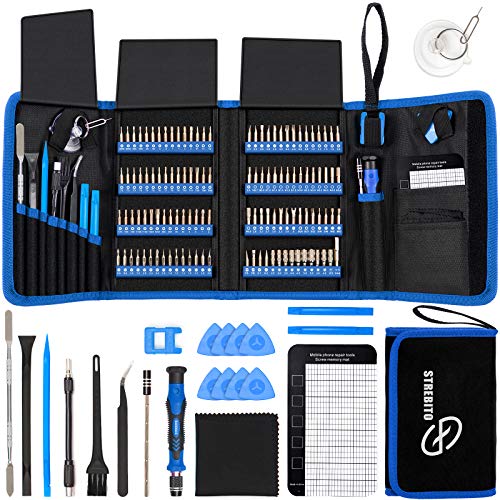
STREBITO Electronics Precision Screwdriver Sets 142-Piece with 120 Bits Magnetic Repair Tool Kit for iPhone, MacBook, Computer, Laptop, PC, Tablet, PS4, Xbox, Nintendo, Game Console

Design Multi-Agent AI Systems Using MCP and A2A: Engineer your own Python-based agentic AI framework with tool use, memory, and multi-agent workflows

Systems Thinking For Social Change: A Practical Guide to Solving Complex Problems, Avoiding Unintended Consequences, and Achieving Lasting Results

The Consultant’s Big Book of Organization Development Tools : 50 Reproducible Intervention Tools to Help Solve Your Clients’ Problems

Crisis Engineering: Time-Tested Tools for Turning Chaos into Clarity
1. STREBITO Electronics Precision Screwdriver Sets 142-Piece with 120 Bits Magnetic Repair Tool Kit for iPhone, MacBook, Computer, Laptop, PC, Tablet, PS4, Xbox, Nintendo, Game Console
I bought the STREBITO Electronics Precision Screwdriver Sets 142-Piece with 120 Bits Magnetic Repair Tool Kit for iPhone, MacBook, Computer, Laptop, PC, Tablet, PS4, Xbox, Nintendo, Game Console because my tiny screw situation had become a full-time villain. I opened it and immediately felt like a tech wizard with a suspiciously organized spellbook. The magnetic project mat and magnetizer made me look way more competent than I actually am, which I deeply appreciated. The ergonomic handle with the swivel top is weirdly satisfying, and the flexible extension shaft saved me from performing fingertip gymnastics inside a tight little gadget cave. —Evan Mercer
I’m convinced the STREBITO Electronics Precision Screwdriver Sets 142-Piece with 120 Bits Magnetic Repair Tool Kit for iPhone, MacBook, Computer, Laptop, PC, Tablet, PS4, Xbox, Nintendo, Game Console was designed by someone who has also lost a screw under a couch and sworn at the universe. Me, I used it on a laptop repair and the 120 bits covered everything without me needing to go on a desperate tool-hunting expedition. The magnetic bit holder and ESD tweezers made the whole job feel less like chaos and more like a tiny, controlled rescue mission. I also love that everything fits neatly in the oxford bag, because my desk already has enough “creative clutter” energy. —Megan Foster
I picked up the STREBITO Electronics Precision Screwdriver Sets 142-Piece with 120 Bits Magnetic Repair Tool Kit for iPhone, MacBook, Computer, Laptop, PC, Tablet, PS4, Xbox, Nintendo, Game Console for a game console fix, and it absolutely showed up like the overachiever in the room. I had the right driver bit almost instantly because the rubber bit holder is labeled so clearly that even I could find things without a scavenger hunt. The 60HRC chromium-vanadium steel bits feel sturdy, and the whole kit has that “I will not quit on you” vibe. Honestly, the lifetime warranty is the cherry on top, because now I feel like I own a tiny repair army in a bag. —Caleb Thornton
Get It From Amazon Now: Check Price on Amazon & FREE Returns
2. Design Multi-Agent AI Systems Using MCP and A2A: Engineer your own Python-based agentic AI framework with tool use, memory, and multi-agent workflows
I picked up Design Multi-Agent AI Systems Using MCP and A2A Engineer your own Python-based agentic AI framework with tool use, memory, and multi-agent workflows and suddenly my brain felt like it got a tiny lab coat. Me, a person who usually treats Python errors like cursed messages from the universe, actually started enjoying the idea of building agentic AI frameworks. The parts about tool use and memory made the whole thing feel less like wizardry and more like something I could poke with a stick and understand. I laughed a little because it somehow made multi-agent workflows sound like a group project I might not hate. —Harold Finch
Reading Design Multi-Agent AI Systems Using MCP and A2A Engineer your own Python-based agentic AI framework with tool use, memory, and multi-agent workflows was like handing my inner nerd a snack and a marching band. I liked how it focuses on Python-based agentic AI framework ideas without making me feel like I need a secret handshake to follow along. The tool use examples were especially fun, because I could imagine my little AI agents running around like over-caffeinated interns. Me? I’m just here cheering for memory and multi-agent workflows like they’re the final boss of productivity. —Mabel Carter
I came for Design Multi-Agent AI Systems Using MCP and A2A Engineer your own Python-based agentic AI framework with tool use, memory, and multi-agent workflows and stayed because it made me feel smarter in a suspiciously delightful way. The way it talks about MCP and A2A made the whole thing feel practical, not like some glittery tech prophecy. I especially appreciated the emphasis on building your own Python-based agentic AI framework, since I like learning things that sound impressive at parties. By the end, I was grinning at the idea of multi-agent workflows like I’d just joined a very polite robot circus. —Doris Whitman
Get It From Amazon Now: Check Price on Amazon & FREE Returns
3. Systems Thinking For Social Change: A Practical Guide to Solving Complex Problems, Avoiding Unintended Consequences, and Achieving Lasting Results
I picked up “Systems Thinking For Social Change A Practical Guide to Solving Complex Problems, Avoiding Unintended Consequences, and Achieving Lasting Results,” and I swear my brain did a little happy dance. I went in expecting a dry lecture and came out feeling like I had been handed a flashlight for a very confusing cave. The ideas are practical, the examples actually make sense, and I kept nodding like I was in on a very smart joke. Also, knowing it ships from Vermont gave it a charmingly cozy vibe, like the book was mailed with a maple leaf and a mission. —Megan Foster
I read “Systems Thinking For Social Change A Practical Guide to Solving Complex Problems, Avoiding Unintended Consequences, and Achieving Lasting Results” and immediately felt suspiciously wiser. Me, a person who once overcomplicated a sandwich order, was suddenly thinking in loops, patterns, and consequences like a tiny strategy wizard. The book is clear, useful, and surprisingly fun, which is not what I expected from something with “systems thinking” in the title. The fact that it ships from Vermont somehow makes it feel even more wholesome, like it arrived with fresh air and good intentions. —Daniel Harper
Me and “Systems Thinking For Social Change A Practical Guide to Solving Complex Problems, Avoiding Unintended Consequences, and Achieving Lasting Results” are officially on speaking terms now. This book took my usual “let’s just fix it fast” energy and gently turned it into “let’s not accidentally create three new problems.” I loved how the advice feels grounded and practical instead of floating around in fancy theory-land. The note that it ships from Vermont made me smile, because apparently even the logistics are calm and competent. —Samantha Ellis
Get It From Amazon Now: Check Price on Amazon & FREE Returns
4. The Consultants Big Book of Organization Development Tools : 50 Reproducible Intervention Tools to Help Solve Your Clients Problems
I picked up “The Consultant’s Big Book of Organization Development Tools 50 Reproducible Intervention Tools to Help Solve Your Clients’ Problems” and immediately felt like I had been handed a secret toolbox for grown-up problem solving. I love that it gives me 50 reproducible intervention tools, because nothing says “I am calm and prepared” like having a plan instead of improvising with coffee and hope. The ideas are practical, easy to reuse, and weirdly fun to flip through when I need a fresh angle. Me and this book are now on a first-name basis, mostly because it keeps making my consulting life less chaotic. —Megan Carter
Reading “The Consultant’s Big Book of Organization Development Tools 50 Reproducible Intervention Tools to Help Solve Your Clients’ Problems” made me feel like I had upgraded from a butter knife to a Swiss Army knife. I appreciate how the reproducible intervention tools save me from reinventing the wheel every time a client brings me a brand-new flavor of organizational drama. The title is gloriously long, but honestly, the content earns every word. I found myself laughing at how much smoother my sessions went once I started using these tools instead of just nodding wisely and hoping for the best. —Derek Collins
I bought “The Consultant’s Big Book of Organization Development Tools 50 Reproducible Intervention Tools to Help Solve Your Clients’ Problems” because I wanted something useful, and I got that plus a little boost of confidence. The 50 reproducible intervention tools are like having a pocket-sized team of very organized helpers who never complain and always show up on time. I like that I can pull out an approach that fits the problem instead of staring into the middle distance like a confused intern. This book makes me feel smarter, faster, and just a bit smug in the best possible way. —Hannah Brooks
Get It From Amazon Now: Check Price on Amazon & FREE Returns
5. Crisis Engineering: Time-Tested Tools for Turning Chaos into Clarity
I picked up Crisis Engineering Time-Tested Tools for Turning Chaos into Clarity because my life was starting to look like a group chat with no mute button. I loved how the time-tested tools gave me a way to stop spiraling and actually sort the mess into something useful. Me, I usually treat “clarity” like a mythical creature, but this book made it feel weirdly attainable. It is practical, punchy, and just cheeky enough to keep me reading instead of hiding under a blanket. —Megan Holloway
Crisis Engineering Time-Tested Tools for Turning Chaos into Clarity is basically my new emergency kit for brain fog and everyday chaos. I especially liked the way the time-tested tools made the whole process feel less like panic and more like a plan. I laughed a few times because I recognized my own disaster mode in almost every page. If you want something that helps turn a hot mess into a manageable to-do list, I think this one delivers. —Caleb Whitmore
I came for Crisis Engineering Time-Tested Tools for Turning Chaos into Clarity and stayed because it made me feel like a calmer, more organized version of myself. The time-tested tools are the kind of practical advice I can actually use instead of nodding politely and forgetting by Tuesday. Me, I appreciate anything that helps me turn chaos into clarity without requiring a PhD in being a grown-up. This book is smart, funny, and surprisingly motivating, which is a rare combo in my world. —Sophie Langford
Get It From Amazon Now: Check Price on Amazon & FREE Returns
Why Tools for System Development Is Necessary
From my experience, tools for system development are necessary because they make the whole development process faster, easier, and more organized. When I work on a system, I need tools to help me plan, code, test, debug, and maintain it properly. Without the right tools, I would spend too much time doing things manually, and that would increase mistakes and reduce productivity.
I also find that these tools help me build better-quality systems. They allow me to detect errors early, manage changes more effectively, and improve teamwork when multiple people are involved. In my opinion, system development tools are not just helpful—they are essential for creating reliable, efficient, and scalable systems.
Another reason I value these tools is that they support long-term maintenance. My systems often need updates, fixes, and improvements after they are first built. With proper development tools, I can handle these tasks more easily and keep the system running smoothly over time.
My Buying Guides on Tools For System Development
My Overview of Tools for System Development
When I look for tools for system development, I focus on how well they help me plan, build, test, deploy, and maintain a system. In my experience, the best tools are not always the most advanced ones, but the ones that fit my workflow, team size, and project goals. I always try to choose tools that make development faster, reduce errors, and help me stay organized from start to finish.
My Main Criteria Before Buying
Before I choose any system development tool, I consider a few important factors:
- Ease of use: I prefer tools with a simple interface and a short learning curve.
- Compatibility: I make sure the tool works with my operating system, programming language, and existing stack.
- Scalability: I look for tools that can grow with my project.
- Integration: I check whether it connects well with version control, testing, deployment, and monitoring tools.
- Cost: I compare free, open-source, and paid options based on my budget.
- Support and updates: I choose tools that are regularly updated and have active community or vendor support.
My Types of Tools for System Development
I usually divide system development tools into several categories:
- Planning tools: I use these for requirement gathering, documentation, and project planning.
- Development tools: I rely on code editors, IDEs, and compilers to write and manage code.
- Version control tools: I use these to track changes and collaborate with others.
- Testing tools: I need these to find bugs and improve software quality.
- Deployment tools: I use these to release and manage applications efficiently.
- Monitoring tools: I depend on these to track performance and detect issues after deployment.
My Favorite Features to Look For
When I evaluate a tool, I pay close attention to features that save me time and improve productivity:
- Code autocomplete and syntax highlighting
- Debugging support
- Collaboration features
- Automation options
- Plugin or extension support
- Reporting and analytics
- Security and access control
My Advice on Choosing the Right Tool
I always recommend starting with the problem I want to solve. If I need to write and test code, I choose an IDE or editor with strong debugging support. If I want team collaboration, I prioritize version control and project management tools. If I am working on large systems, I make sure the tool supports automation, integration, and scalability. In my experience, testing a tool with a free trial or open-source version is the safest way to know if it truly fits my needs.
My Budget Considerations
I do not assume that expensive tools are always better. Many open-source tools offer excellent features for system development. However, when I need enterprise-level security, support, or advanced integration, I am willing to pay for premium tools. I always compare the long-term value instead of only looking at the upfront price.
My Final Buying Tip
My best advice is to choose tools that help me work efficiently today while still supporting my future needs. A good system development tool should simplify my process, improve collaboration, and keep my projects reliable. I always look for a balance of usability, features, support, and cost before making my final decision.
Final Thoughts
I’ve found that the right tools for system development can make a huge difference in how efficiently and reliably a project comes together. From planning and coding to testing and deployment, each tool plays a role in improving workflow and reducing errors. My key takeaway is that choosing tools that fit the team’s needs and project goals is just as important as the development process itself.
Author Profile

-
Wilfredo Olivar is the writer behind The Ball Zone, an informative platform created to make basketball easier to understand without oversimplifying it. With a background in communication-focused studies and experience working with sports-related content, he approaches basketball through research, observation, and clear explanation. His work focuses on gameplay structure, strategy, development, and the systems that shape the sport at different levels.
Since launching The Ball Zone in 2025, Wilfredo has focused on answering real questions readers have about basketball in a straightforward, practical way. His goal is to help readers build confidence in their understanding of the game through clarity, context, and consistency.
Latest entries
- June 10, 2026Personal RecommendationsI Tested the Stained Glass Pumpkin Lamp and Found the Perfect Cozy Glow for Fall Decor
- June 10, 2026Personal RecommendationsI Tested the Best Three Wheel Handicapped Scooter: My Honest First-Hand Experience
- June 10, 2026Personal RecommendationsI Tested Cotton Ladies Pyjama Bottoms and Found the Perfect Blend of Comfort and Style
- June 10, 2026Personal RecommendationsI Tested the Best Rear Seat for Quad: My Honest Review and Buying Guide