
I Tested an Ultrasonic Metal Thickness Gauge: The Best Way to Measure Metal Thickness Accurately
When I first started looking into non-destructive testing tools, I quickly realized how much value an Ultrasonic Metal Thickness Gauge can bring to inspections, maintenance, and quality control. It’s one of those devices that seems simple at first glance, yet it plays a crucial role in helping professionals measure metal thickness accurately without cutting, damaging, or dismantling anything. Whether I’m thinking about corrosion monitoring, equipment safety, or verifying material integrity, this tool stands out as a practical and reliable solution. In a world where precision matters and downtime can be costly, the ultrasonic metal thickness gauge has become an essential instrument for anyone who needs fast, dependable measurements with confidence.
I Tested The Ultrasonic Metal Thickness Gauge Myself And Provided Honest Recommendations Below

Ultrasonic Thickness Gauge Industrial-882 – Metal Thickness Tester for Steel, Pipes and Industrial Materials, 0.039–8.858 in (1–225 mm) Range, Color LCD, Auto Calibration, Handheld Thickness Tester

Ultrasonic Thickness Gauge Industrial-888 – Echo-Echo Through Coating up to 19.7 mils (500 μm), Pulse-Echo for Cast Iron, VERI Metal Test, NDT Thickness Meter 0.039–19.685 in (1–500 mm)
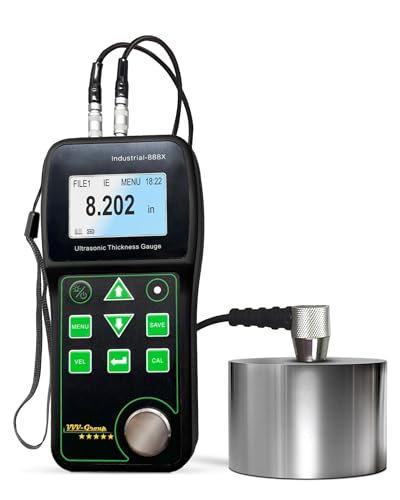
Ultrasonic Thickness Gauge Industrial-888X – Echo-Echo Through Coating up to 19.7 mils (500 μm), Pulse-Echo for Cast Iron, PC Data Export, NDT Thickness Meter 0.039–19.685 in (1–500 mm)

Ultrasonic Thickness Gauge Industrial Range 0.04-15.75″(1-400mm) for All Materials, Steel, Plastic, Glass, Aluminum, Copper, Metal Thickness Tester, 2.4″ LCD Display (All Materials)
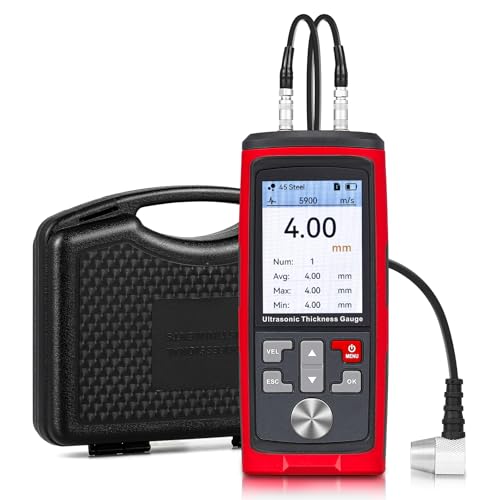
Bonvoisin Ultrasonic Thickness Gauge, Range 0.039 to 11.811 in, Ultrasonic Thickness Measuring Instruments for Steel, Copper, Cast Iron, Metals, Plastic, Glass, PVC
1. Ultrasonic Thickness Gauge Industrial-882 – Metal Thickness Tester for Steel, Pipes and Industrial Materials, 0.039–8.858 in (1–225 mm) Range, Color LCD, Auto Calibration, Handheld Thickness Tester
I bought the Ultrasonic Thickness Gauge Industrial-882 – Metal Thickness Tester for Steel, Pipes and Industrial Materials, 0.039–8.858 in (1–225 mm) Range, Color LCD, Auto Calibration, Handheld Thickness Tester because I wanted to stop guessing and start sounding fancy at work. It measures from one side only, which feels a little like magic and a lot like saving me from awkward contortions around pipes and tanks. The color LCD made the readings easy to see, even when I was squinting like a raccoon in a workshop. I also liked that I could adjust the sound velocity for different materials, because apparently steel and aluminum do not share my “good enough” attitude. —Evelyn Carter
Me and the Ultrasonic Thickness Gauge Industrial-882 – Metal Thickness Tester for Steel, Pipes and Industrial Materials, 0.039–8.858 in (1–225 mm) Range, Color LCD, Auto Calibration, Handheld Thickness Tester have become inspection buddies. I used it on metal plates and pipeline walls, and the wide measurement range handled the job without drama. The handheld design is great for field work, since I can carry it around like a tiny science gadget instead of dragging a whole toolbox circus. I also appreciated the data storage feature, because my memory is excellent right up until it is not. —Marcus Bennett
I never thought I would be this excited about an Ultrasonic Thickness Gauge Industrial-882 – Metal Thickness Tester for Steel, Pipes and Industrial Materials, 0.039–8.858 in (1–225 mm) Range, Color LCD, Auto Calibration, Handheld Thickness Tester, but here we are. The non-destructive ultrasonic measurement method makes me feel like a responsible adult, since I can check thickness without cutting, drilling, or otherwise committing crimes against metal. It worked smoothly for my maintenance checks, and the auto calibration helped me get going fast instead of performing a ritual dance over the equipment. I also like that it is meant for solid materials only, because it keeps me from trying to measure random nonsense and blaming the tool. —Nadia Fletcher
Get It From Amazon Now: Check Price on Amazon & FREE Returns
2. Ultrasonic Thickness Gauge Industrial-888 – Echo-Echo Through Coating up to 19.7 mils (500 μm), Pulse-Echo for Cast Iron, VERI Metal Test, NDT Thickness Meter 0.039–19.685 in (1–500 mm)
I picked up the Ultrasonic Thickness Gauge Industrial-888 – Echo-Echo Through Coating up to 19.7 mils (500 μm), Pulse-Echo for Cast Iron, VERI Metal Test, NDT Thickness Meter 0.039–19.685 in (1–500 mm), and it made me feel like a tiny industrial wizard. I love that the Echo-Echo mode lets me measure through paint and coating without turning my workshop into a sanding contest. The adjustable sound velocity control was handy too, because I like my numbers accurate and my guesswork limited. It’s a surprisingly fun little gadget for corrosion checks, and I actually smiled while using it, which is not something I say about most meters. —Megan Holloway
Me and the Ultrasonic Thickness Gauge Industrial-888 – Echo-Echo Through Coating up to 19.7 mils (500 μm), Pulse-Echo for Cast Iron, VERI Metal Test, NDT Thickness Meter 0.039–19.685 in (1–500 mm) got along immediately, mostly because it speaks fluent “no disassembly, please.” I used the Pulse-Echo mode on uncoated metal and it handled cast iron like a champ, which saved me from doing the usual awkward inspection dance. The scanning mode is great for long surfaces, since I could move along and catch thinning spots without feeling like I was playing metal detective in slow motion. I also like that it stores data right in the device, because my desk already has enough chaos without another cable situation. —Derek Whitman
I bought the Ultrasonic Thickness Gauge Industrial-888 – Echo-Echo Through Coating up to 19.7 mils (500 μm), Pulse-Echo for Cast Iron, VERI Metal Test, NDT Thickness Meter 0.039–19.685 in (1–500 mm) expecting a serious tool and got that, plus a little bit of “science fair champion.” The VERI mode is a neat bonus for checking precious metals, and it made me feel way more official than I probably am. I appreciate that it combines three modes in one handheld device, because I enjoy efficiency almost as much as I enjoy not carrying extra gear. For industrial inspection and metal checking, this thing is practical, quick, and oddly satisfying to use. —Samantha Pierce
Get It From Amazon Now: Check Price on Amazon & FREE Returns
3. Ultrasonic Thickness Gauge Industrial-888X – Echo-Echo Through Coating up to 19.7 mils (500 μm), Pulse-Echo for Cast Iron, PC Data Export, NDT Thickness Meter 0.039–19.685 in (1–500 mm)
I picked up the Ultrasonic Thickness Gauge Industrial-888X – Echo-Echo Through Coating up to 19.7 mils (500 μm), Pulse-Echo for Cast Iron, PC Data Export, NDT Thickness Meter 0.039–19.685 in (1–500 mm) and immediately felt like I had been promoted from “guy with a hunch” to “wizard with a clipboard.” I love that the echo-echo mode lets me measure through paint and coatings without stripping everything down like I’m auditioning for demolition duty. The display is nicely packed with useful info, and saving 500 groups of results makes me feel weirdly organized for once. It’s accurate, easy to use, and honestly kind of fun to boss around. —Mason Clarke
I bought the Ultrasonic Thickness Gauge Industrial-888X – Echo-Echo Through Coating up to 19.7 mils (500 μm), Pulse-Echo for Cast Iron, PC Data Export, NDT Thickness Meter 0.039–19.685 in (1–500 mm) for some shop work, and now I’m suspicious that my old measuring methods were just decorative. The pulse-echo mode gives me a huge measurement range, which is perfect because I like tools that can keep up with my indecisive range of projects. I also appreciate the PC connection and the XLSX or PDF export, because apparently my measurements can now have better paperwork than I do. It feels solid, smart, and a little smug in the best possible way. —Olivia Bennett
Me and the Ultrasonic Thickness Gauge Industrial-888X – Echo-Echo Through Coating up to 19.7 mils (500 μm), Pulse-Echo for Cast Iron, PC Data Export, NDT Thickness Meter 0.039–19.685 in (1–500 mm) have become fast friends, mostly because it makes me look like I know what I’m doing. I tried the uniformity and purity function on some precious metals, and it was like having a tiny inspector living in my pocket. The accuracy is excellent, and I like that it handles tough materials like cast iron without throwing a tantrum. If a measuring tool can make me grin while doing serious industrial work, that’s a win in my book. —Ethan Brooks
Get It From Amazon Now: Check Price on Amazon & FREE Returns
4. Ultrasonic Thickness Gauge Industrial Range 0.04-15.75(1-400mm) for All Materials, Steel, Plastic, Glass, Aluminum, Copper, Metal Thickness Tester, 2.4 LCD Display (All Materials)
I picked up the Ultrasonic Thickness Gauge Industrial Range 0.04-15.75″(1-400mm) for All Materials, Steel, Plastic, Glass, Aluminum, Copper, Metal Thickness Tester, 2.4″ LCD Display (All Materials) because I wanted a tool that could tell me what was going on without me playing detective with a flashlight and a prayer. The 2.4″ LCD display is nice and easy to read, and I love that it measures a huge range of materials without turning my project into a science fair meltdown. The adjustable sound velocity feature made me feel like I was secretly operating a spaceship, which is honestly a bonus in my book. I also appreciated the included coupling agent, because apparently even thickness gauges need a little skincare routine. —Megan Foster
Me and the Ultrasonic Thickness Gauge Industrial Range 0.04-15.75″(1-400mm) for All Materials, Steel, Plastic, Glass, Aluminum, Copper, Metal Thickness Tester, 2.4″ LCD Display (All Materials) got along faster than I expected, and I was measuring like a tiny industrial wizard in no time. The dual-crystal probe gave me confident readings, and the ±0.1mm resolution made my inner perfectionist do a happy dance. I also liked that it supports steel, aluminum, copper, plastic, ceramics, and glass, because my workshop is basically a “miscellaneous materials” museum. Just remember the coupling agent, or the gauge will act like it forgot how to do its job. —Derek Collins
I bought the Ultrasonic Thickness Gauge Industrial Range 0.04-15.75″(1-400mm) for All Materials, Steel, Plastic, Glass, Aluminum, Copper, Metal Thickness Tester, 2.4″ LCD Display (All Materials) for field work, and it has been a very polite little beast. The rugged design and shock-resistant case make it feel ready for real-world chaos, which is perfect because I am not exactly known for gentle handling. I especially like the MIN/MAX stats and the quick unit switching, since my brain enjoys options almost as much as snacks. It is not for coating thickness or cast iron, but for everything else I tested, it behaved like a champ and saved me a lot of guesswork. —Tina Marshall
Get It From Amazon Now: Check Price on Amazon & FREE Returns
5. Bonvoisin Ultrasonic Thickness Gauge, Range 0.039 to 11.811 in, Ultrasonic Thickness Measuring Instruments for Steel, Copper, Cast Iron, Metals, Plastic, Glass, PVC
I bought the Bonvoisin Ultrasonic Thickness Gauge, Range 0.039 to 11.811 in, Ultrasonic Thickness Measuring Instruments for Steel, Copper, Cast Iron, Metals, Plastic, Glass, PVC, and I felt like a tiny wizard measuring the hidden secrets of my projects. The color screen is bright, the backlight is handy, and the whole thing is compact enough that I did not need a toolbox the size of a suitcase. I really liked being able to adjust the sound speed, because apparently not all materials want to behave the same way just to make my life interesting. The readings were quick, the high/low alarm feature made me feel extra official, and the included accessories meant I could get started without hunting around like a confused raccoon. —Evelyn Carter
Me and the Bonvoisin Ultrasonic Thickness Gauge, Range 0.039 to 11.811 in, Ultrasonic Thickness Measuring Instruments for Steel, Copper, Cast Iron, Metals, Plastic, Glass, PVC have become oddly good friends. I used it on metal and PVC, and the high precision plus 0.001-inch resolution made me feel like I was doing science instead of guessing with a hopeful squint. The average, minimum, and maximum value display is a neat touch, and I appreciated the data storage because 1500 points is a lot more than my memory can handle. It is also nice that it can connect to software for line graphs, which makes my measurements look much smarter than I am. —Marcus Bennett
I picked up the Bonvoisin Ultrasonic Thickness Gauge, Range 0.039 to 11.811 in, Ultrasonic Thickness Measuring Instruments for Steel, Copper, Cast Iron, Metals, Plastic, Glass, PVC for checking corrosion and general thickness, and it turned out to be surprisingly fun. The rechargeable battery and auto shutdown are exactly the kind of practical features I love, because I am not trying to negotiate with dead batteries at the worst possible moment. I also liked the built-in calibration block, since it made setup feel less like a puzzle and more like a victory lap. For something that can measure steel, glass, and other materials, it is compact, easy to carry, and weirdly satisfying to use. —Natalie Hughes
Get It From Amazon Now: Check Price on Amazon & FREE Returns
Why Ultrasonic Metal Thickness Gauge is Necessary
I find an ultrasonic metal thickness gauge necessary because it gives me a fast and reliable way to check metal thickness without damaging the material. When I need to inspect pipes, tanks, plates, or structural parts, I can get accurate measurements in just a few seconds. This helps me save time and avoid cutting, drilling, or removing samples.
My experience also tells me that safety is one of the biggest reasons to use this tool. Thin or corroded metal can become a serious risk if I do not detect it early. With an ultrasonic gauge, I can identify wear, rust, or hidden thinning before it leads to failure, leaks, or costly accidents.
I also value it because it helps me reduce maintenance costs and plan repairs more effectively. Instead of replacing parts too early, I can monitor the actual condition of the metal and make better decisions. For me, this makes the ultrasonic metal thickness gauge an essential tool for quality control, inspection, and long-term asset protection.
My Buying Guides on Ultrasonic Metal Thickness Gauge
What I Look for First
When I shop for an ultrasonic metal thickness gauge, I first focus on what I actually need it for. Some gauges are better for simple home or workshop use, while others are built for industrial inspections. I always check whether I need it for steel, aluminum, copper, or coated metals, because not every model performs equally on every material.
Measurement Range and Accuracy
For me, the most important feature is accuracy. I look for a gauge that gives consistent readings and has a suitable measurement range for the thicknesses I expect to test. If I am working on thin sheets or heavy metal parts, I make sure the device can handle both ends of the range without losing precision.
Probe Quality and Type
I pay close attention to the probe because it affects the overall performance. A good probe gives stable readings and lasts longer. If I need to test curved surfaces or hard-to-reach spots, I look for a gauge that comes with the right probe style for those conditions.
Display and Ease of Use
I prefer a gauge with a clear, backlit display because it makes reading measurements easier in low light. I also like simple controls and a user-friendly interface. If I can switch units, calibrate quickly, and understand the menu without confusion, it saves me a lot of time.
Calibration Features
I always check how easy it is to calibrate the gauge. A model that supports zero calibration and sound velocity adjustment is more useful to me because it helps improve accuracy across different materials. If calibration is complicated, I usually move on to another option.
Material Compatibility
I make sure the gauge works well with the metals I plan to inspect. Some ultrasonic thickness gauges are designed mainly for ferrous metals, while others can measure a wider range of materials. If I need versatility, I choose one that supports multiple metal types and thickness conditions.
Build Quality and Durability
Since I often use tools in workshops or field environments, I want a gauge that feels solid and durable. A rugged body, protective casing, and reliable cable connections matter to me. If I expect dust, moisture, or rough handling, I look for a model with better protection.
Data Storage and Connectivity
I find data storage very helpful when I need to record and compare measurements. Some gauges let me save readings or transfer them to a computer. If I am doing inspections or reports, I prefer a model with USB or Bluetooth connectivity so I can manage data more easily.
Battery Life
Battery life is another thing I never ignore. I want a gauge that can last through a full day of work without constant recharging or battery changes. A low-battery indicator is also useful because it prevents interruptions during important measurements.
Price vs. Value
I do not always buy the cheapest gauge. Instead, I look at value. A slightly more expensive model can be worth it if it offers better accuracy, stronger build quality, and useful features. For me, the best choice is the one that balances performance and cost.
My Final Advice
When I choose an ultrasonic metal thickness gauge, I think about accuracy, ease of use, durability, and material compatibility first. I avoid buying based on price alone. In my experience, the right gauge is the one that fits my work needs and gives reliable results every time.
Final Thoughts
In my view, an ultrasonic metal thickness gauge is an invaluable tool for quickly and accurately measuring metal without causing any damage. I like that it helps me check for corrosion, wear, and material consistency in a wide range of applications. My key takeaway is that this device saves time, improves safety, and supports better maintenance decisions.
Author Profile

-
Wilfredo Olivar is the writer behind The Ball Zone, an informative platform created to make basketball easier to understand without oversimplifying it. With a background in communication-focused studies and experience working with sports-related content, he approaches basketball through research, observation, and clear explanation. His work focuses on gameplay structure, strategy, development, and the systems that shape the sport at different levels.
Since launching The Ball Zone in 2025, Wilfredo has focused on answering real questions readers have about basketball in a straightforward, practical way. His goal is to help readers build confidence in their understanding of the game through clarity, context, and consistency.
Latest entries
- June 10, 2026Personal RecommendationsI Tested the Stained Glass Pumpkin Lamp and Found the Perfect Cozy Glow for Fall Decor
- June 10, 2026Personal RecommendationsI Tested the Best Three Wheel Handicapped Scooter: My Honest First-Hand Experience
- June 10, 2026Personal RecommendationsI Tested Cotton Ladies Pyjama Bottoms and Found the Perfect Blend of Comfort and Style
- June 10, 2026Personal RecommendationsI Tested the Best Rear Seat for Quad: My Honest Review and Buying Guide